


Why anxiety gets louder at bedtime
If your mind starts racing the moment you turn off the light, you're not doing anything wrong. Lots of nights start this way, and there's a reason.
Anxiety and poor sleep tend to travel together. Each one can make the other worse, which builds a loop of worry and short nights [1].

How worry and sleep feed each other

Worry keeps you up
When you're anxious, it can be harder to fall asleep in the first place.
Waking in the dark
Anxiety can also make it harder to stay asleep, so you may wake and find your worries waiting.
Restless dreams
Anxiety often comes with nightmares, and bad dreams can chip away at your rest.
Nighttime anxiety can grow from a stressful week, a big change, or a mind that simply won't switch off. Our guide on why anxiety often feels worse after dark digs into the causes.
How a routine teaches your body that sleep is next
Here's the hopeful part. You don't need a long evening for this: the printable routine below fits into about 30 minutes.
Think of each step as a signal. Do the same things in the same order, and after a while your body starts to wind down at the first step, well before you reach your pillow. Our guide to a bedtime routine for adults covers the basics every routine shares.
Free habits for a calming bedtime routine
None of these cost a thing, and you can start tonight. Pick what fits your evening, then keep it steady.
Set a bedtime and keep it. Going to bed and waking at about the same time, weekends too, gives your routine a fixed point.
Put away electronics. Screens keep your mind in reply mode, so charge your phone outside the bedroom.
Have a light snack or bedtime tea. A small snack helps if hunger wakes you, and a warm, caffeine-free tea like chamomile is a classic cue.
Play quiet music. Slow songs without lyrics give your mind something soft to follow.
Stretch, breathe and relax. A few minutes of gentle movement lets your muscles release the day.
Lay out tomorrow. Set out your clothes and bag, so there's less to plan in the dark.

Light and temperature in the hour before bed
Light is one of the strongest cues your body reads. In the last hour, use lamps instead of overhead lights, and choose warm, low bulbs.
Warmth belongs to the wind-down too: a warm shower, soft layers, a cozy chair. Then let your bedroom stay on the cool side, with a cracked window or a lighter blanket, so you're comfortable under the covers.

Blackout curtains or an eye mask help if streetlights or early sun reach your bed. Small changes, done every night, add up.
Calm your mind before your head hits the pillow
An anxious mind often needs a job before it can rest. So give it one.
Write a mental dump list
Write down everything on your mind: tasks, worries, half-finished thoughts. You're not solving anything tonight. You're just moving it onto paper, where it can wait until morning.
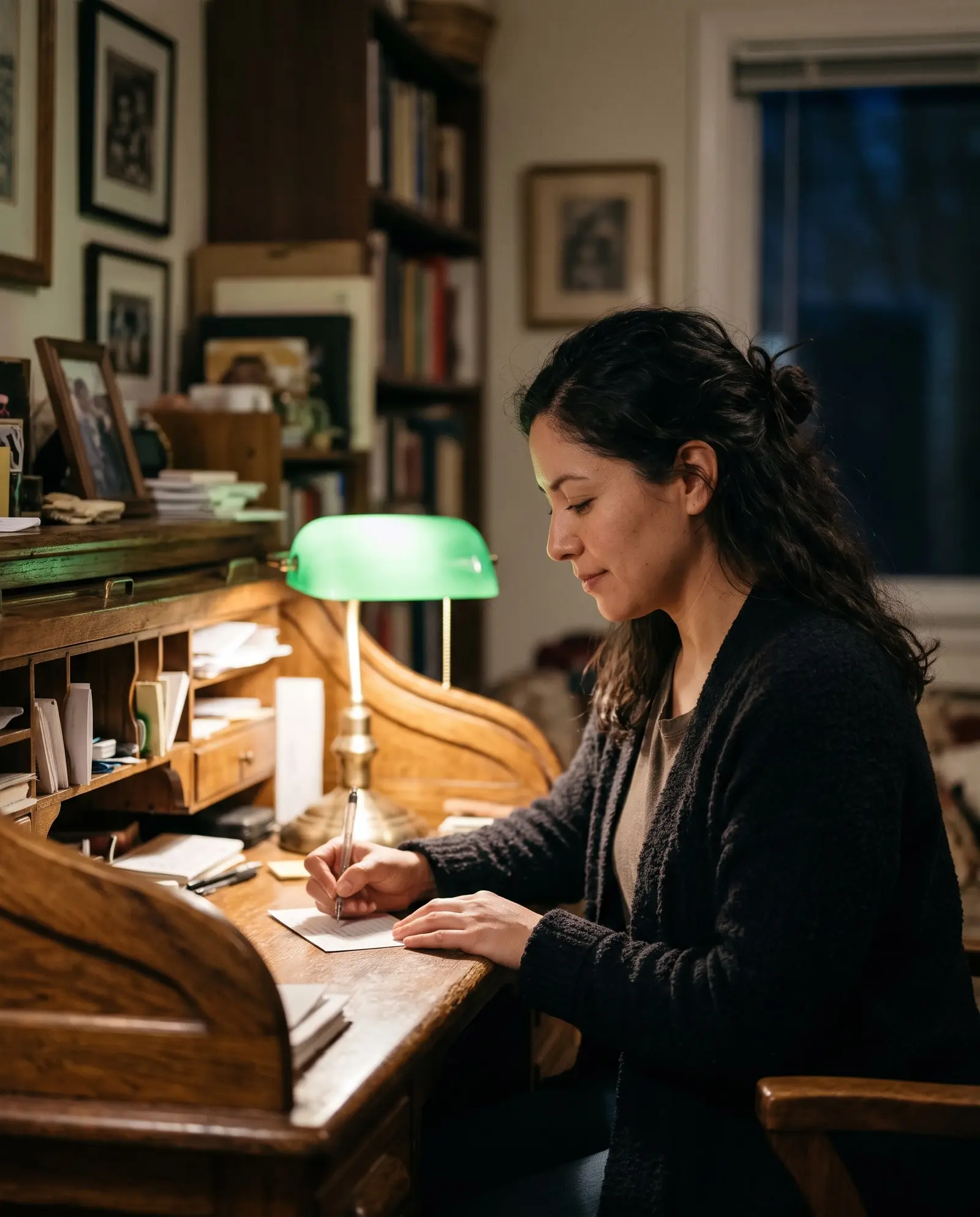
Ground yourself in the room
If worry spikes, slowly name five things you can see, four you can hear and three you can feel. It gives your thoughts something solid to land on.

Pick a mind-calming practice
Try each one for a few nights, then keep the one that feels best to you.
Slow breathing
Breathe in through your nose for a count of four, then out through your mouth for a count of six. Letting the out-breath run longer is an easy way to begin relaxing.
- Time
- 5 minutes
- Where
- In bed or in a chair
Progressive muscle relaxation
Tense one muscle group for a few seconds, then let it go, working from your feet up to your face. You'll feel the difference between tight and loose.
- Time
- 10 minutes
- Good for
- A tense, buzzing body
Body scan
Rest your attention on each part of your body in turn, without changing anything. When a worry pops up, notice it, then come back.
- Time
- 10 to 15 minutes
- Good for
- A busy, looping mind
A gentle book
Choose something calm and familiar, on paper, in low light. Stop when your eyes start to close.
- Time
- 15 to 20 minutes
- Good for
- When sitting still feels hard
For more ways to quiet the noise, see our guide to settling a racing mind, day and night.
Using scent as a bedtime cue
Scent is a quiet but strong cue. Lavender's popular scent has long been used in bath products, perfumes and aromatherapy [2], which makes it a natural fit for your evening shower. Our guide to lavender soap and how it feels in the shower covers the scent in more detail.
The scent is only half of it. The other half is consistency: the same scent, at the same step, night after night.
You use it at the same point in your routine each night.
Over time, your brain pairs the scent with winding down.
The smell alone starts to signal that bedtime is near.
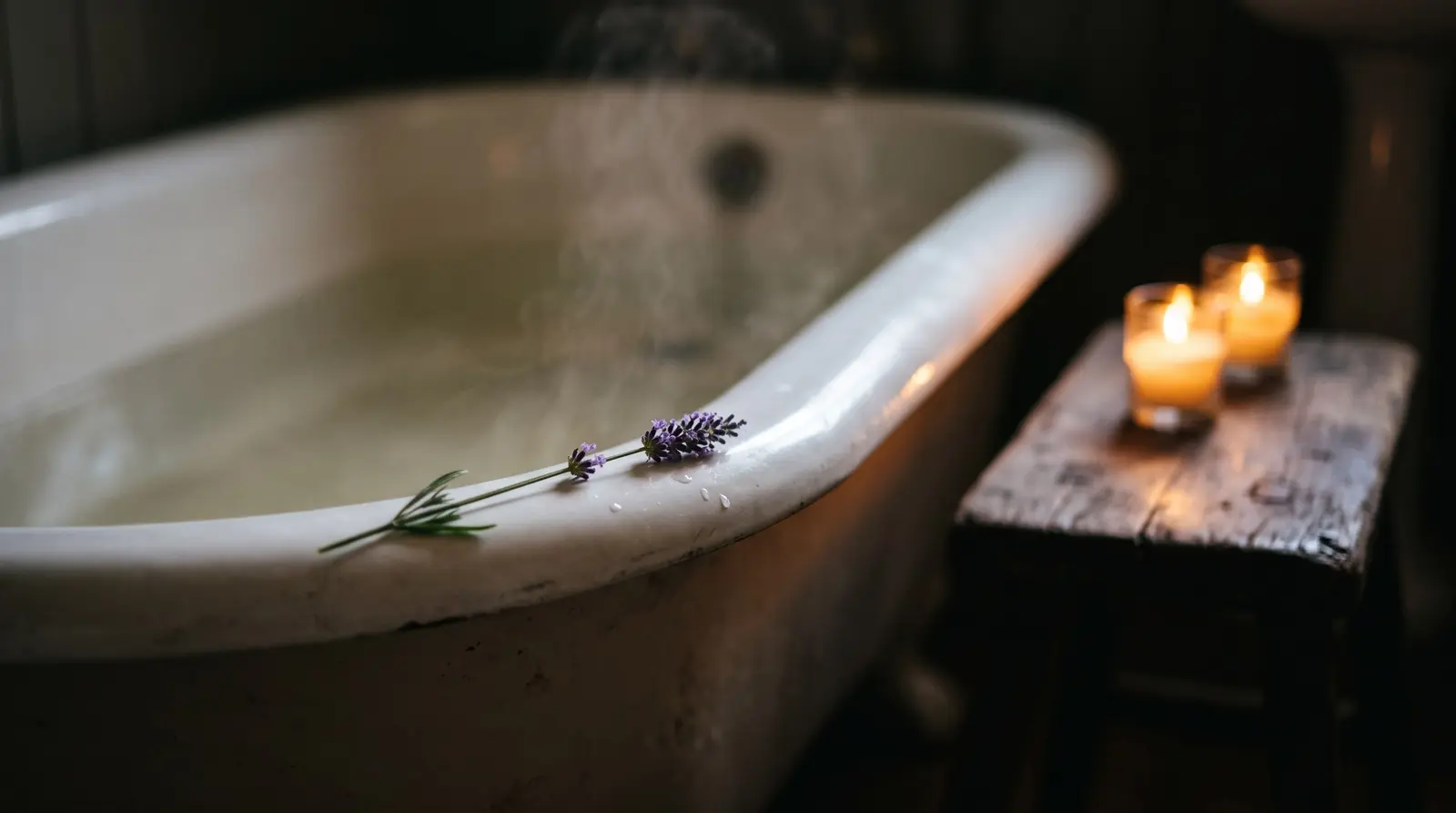
A 30-minute calming bedtime routine for anxiety you can print
Here's a short routine you can print and keep on your fridge. Set your bedtime, and each step lines up behind it.
Your 30-minute calming routine
- 30 minutes before
Lights low, phone away
Switch to lamps and leave your phone charging in another room.
- 25 minutes before
Warm shower
Keep it short and warm, and breathe in the steam.
- 15 minutes before
Worry list
Write down what's still on your mind, plus one thing that went well today.
- 10 minutes before
Slow breathing
Five rounds: in for four, out for six.
- 5 minutes before
A few pages
Read something gentle by low light.
- Bedtime
Lights out
Settle in and let sleep come on its own.
In bed: let sleep come to you
Once the light is off, the most helpful thing you can do is stop trying. Sleep is something you allow, not something you force.
Turn the clock away. Checking the time adds math and worry to a quiet moment.
Keep your bed for sleep. This is called stimulus control: your brain learns to link the bed with rest, not with worry.
Don't chase it. Trying hard to sleep keeps you alert, so let your breath do the work.
What to do if you wake up anxious in the middle of the night
If you wake and your mind starts racing, keep the lights low and the clock out of sight. Try your slow breathing or a body scan first.
If you're still wide awake after a while, get up. Sit somewhere dim, read a few pages or write the worry down, then go back to bed once you feel sleepy. Our guide to habits that help you fall asleep and stay asleep has more ideas for the rest of your night.
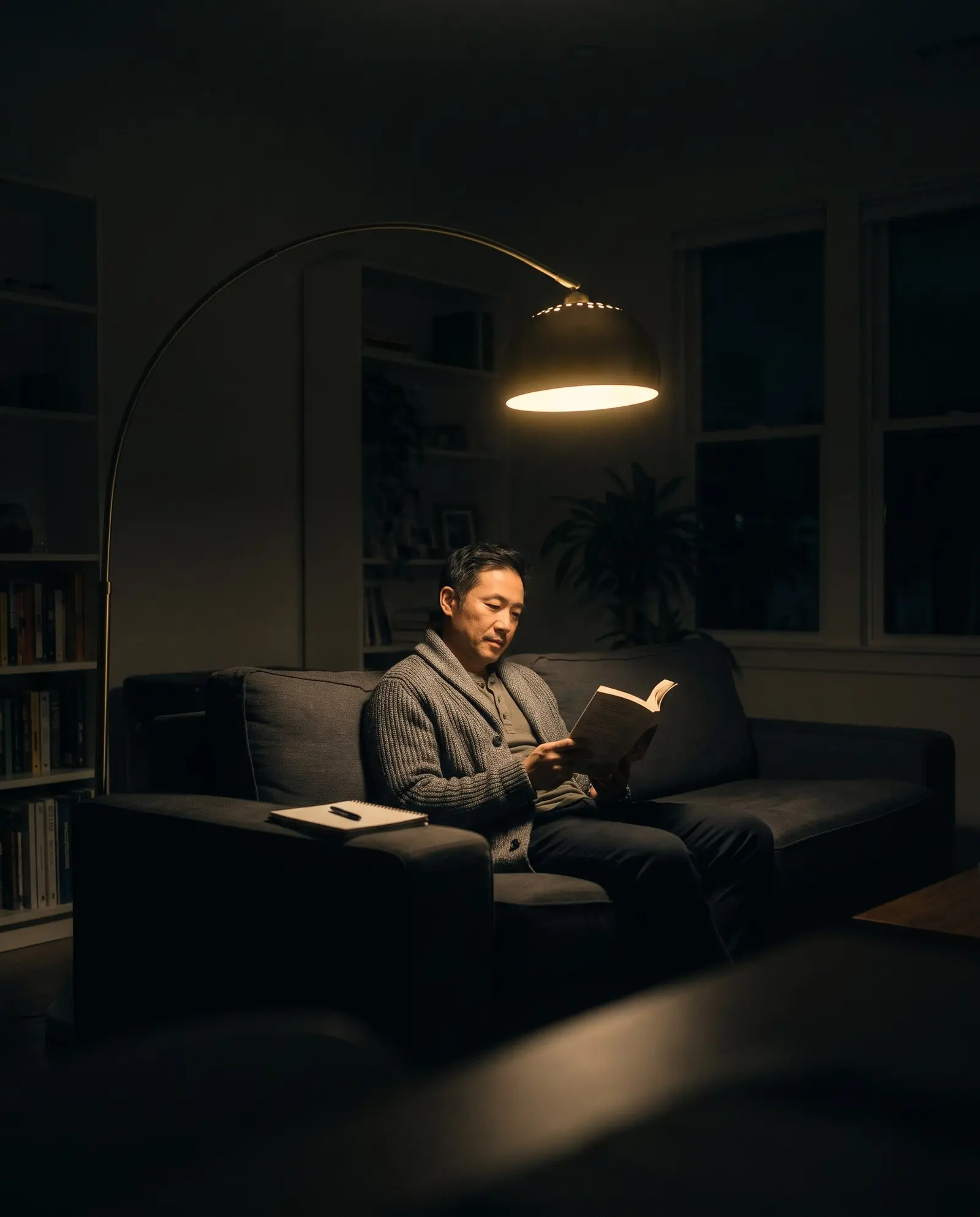
Keeping your routine on busy nights and trips
Some nights won't go to plan. A late dinner, a deadline or a hotel bed can throw off your whole evening, so shrink the routine instead of dropping it.

Your routine, sized for the night
Keep the core cues, trim the rest.
The full routine
Every step of your usual routine, at an easy pace.
- Time
- 30 to 60 minutes
The 10-minute version
Dim the lights, write three lines of worries, then take five slow breaths in bed. Short, but the cues still line up.
- Time
- 10 minutes
The travel kit
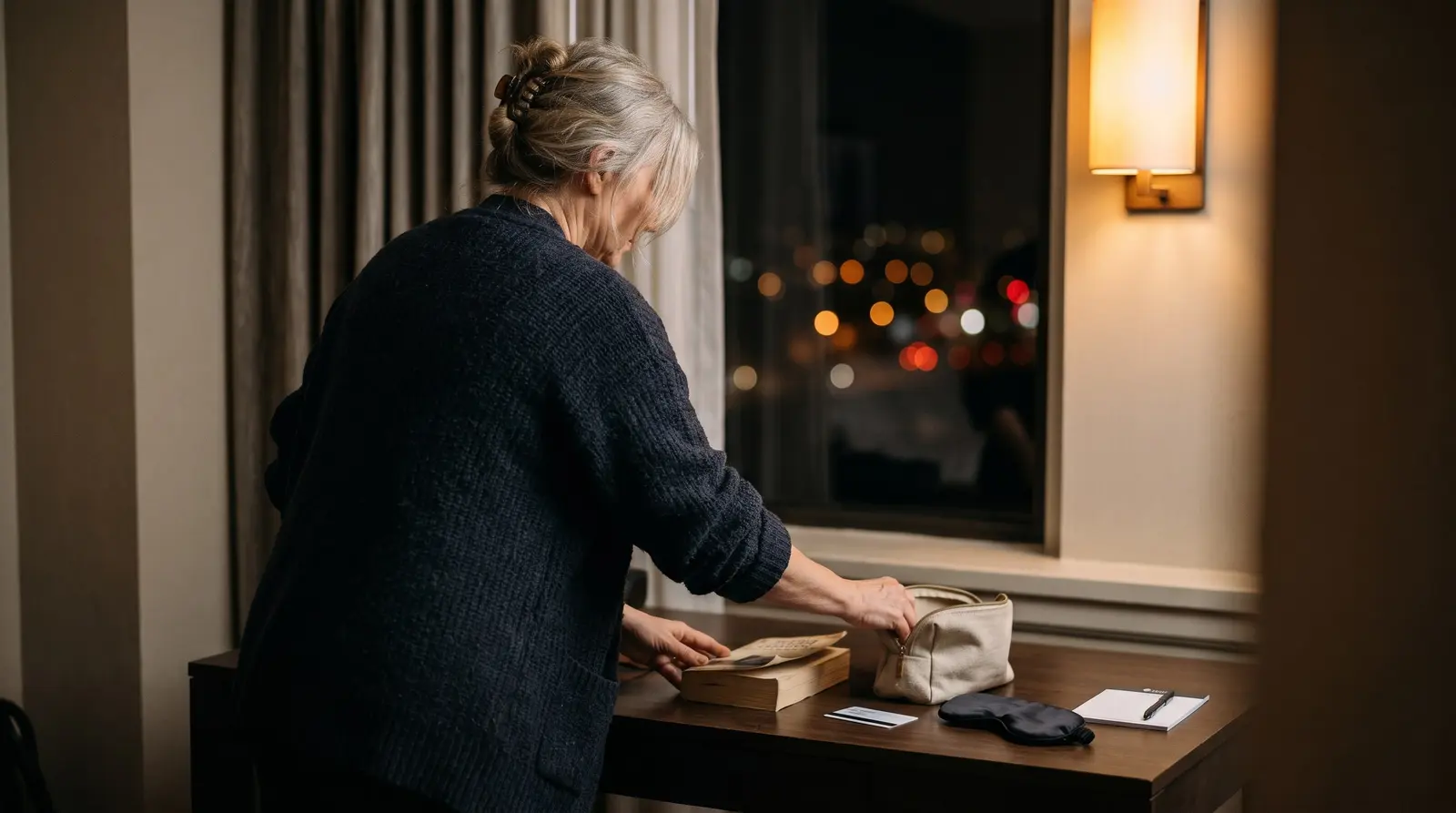
Pack the cues that go anywhere: a familiar scent, an eye mask, a paperback and your notebook. Same steps, new room.
- Time
- 15 minutes
The late-evening version
Skip the shower but keep the dim light and the breathing. Head to bed as soon as you feel sleepy.
- Time
- 5 to 10 minutes
Track your routine for two weeks
You won't know what calms you best until you watch it for a while. For two weeks, jot a few notes each morning:
Which steps you did last night
About when you turned off the light
How calm you felt in bed, from 1 to 5
How rested you felt on waking
Then look for patterns. Maybe shower nights feel calmer, or phone nights feel worse. Keep what helps and drop what doesn't, and the routine becomes truly yours.

Lavender, chamomile and magnesium: what the research says
Some ingredients have a long history in the evening. Here's where the science stands on three that come up again and again.
Lavender
Lavender is promoted as a calming herb [2]. A large 2019 review pooled 37 trials of lavender in different forms. In the trials where people breathed it in, lavender was linked to lower anxiety scores [3].
Many of those trials had weak spots in their design, and they were set up in very different ways, so the authors called it an indication of an effect [3]. For sleep itself, it's still unclear whether lavender aromatherapy helps [2].
Chamomile
Chamomile was an important herb in ancient China, Egypt, Greece and Rome [4]. Today it's a bedtime tea staple, and a review of 12 small trials found better sleep quality after chamomile [5].
For anxiety, early studies suggest a chamomile supplement might help [4], and larger trials are still needed [5].
Magnesium citrate
Magnesium is a mineral your nerves and muscles rely on. The citrate form tends to be absorbed better than oxide [7].
For sleep, the research is early. A 2021 review of three small studies suggested older adults with insomnia fell asleep faster, though the reviewers rated the studies low quality [6].
Frequently asked questions
What is the relationship between anxiety and insomnia?
The same tools help with both: relaxation techniques and steady sleep habits are part of the usual care for each. That's why a routine is worth building.
Why do we overthink at night?
During the day, work, people and noise pull your attention outward. At night those pulls fade, so thoughts you parked earlier come back.
How do I stop anxiety dreams?
You can't switch dreams off, but you can ease what you carry into sleep. Try writing your worries down earlier in the day, so less of them comes to bed with you. If they keep coming back, the safety notes at the end cover next steps.
My 8-year-old is scared at night. What can I do to help?
Start with open-ended questions so your child can tell you what's scary. Skip the monster check in the closet, since it can reinforce the fear, and build their confidence and coping skills during the day. A night light or very dim lamp helps some kids feel safe.
Safety notes and when to see a doctor
The habits above are gentle. A few points matter before you add an herb or supplement to your evening.
References
- Anxiety and Insomnia. Sleep Foundation.↩
- Lavender. NCCIH (NIH).↩
- Effects of lavender on anxiety: A systematic review and meta-analysis (Phytomedicine, 2019). PubMed / NLM.↩
- Chamomile. NCCIH (NIH).↩
- Therapeutic efficacy and safety of chamomile for state anxiety, GAD, insomnia, and sleep quality: systematic review and meta-analysis (Phytother Res, 2019). PubMed / NLM.↩
- In the News: Magnesium Supplements for Sleep Disorders. NCCIH (NIH).↩
- Magnesium - Health Professional Fact Sheet. NIH Office of Dietary Supplements.↩
- Tips if Your Child is Afraid of the Dark. Cleveland Clinic.↩
These statements have not been evaluated by the Food and Drug Administration. This product is not intended to diagnose, treat, cure, or prevent any disease.



Comments
Sign in to join the conversation.
No comments yet. Be the first.