


What sleep hygiene is, and why it matters for insomnia
Sleep hygiene is a plain name for your sleep habits: what you do in the hours before bed, how your bedroom feels, and how steady your days are.
Insomnia means trouble falling asleep, staying asleep, or waking too early and not drifting back off. When it shows up night after night, your habits are one of the first places to look.
That's good news, because habits are something you can change tonight. MedlinePlus puts it simply: in many cases, a few simple lifestyle changes can ease insomnia [7].
So what is poor sleep hygiene?
Poor sleep hygiene is when your habits quietly work against you. A late coffee, a glass of wine to unwind, a laptop in bed, a bedtime that shifts by two hours on weekends.
None of these is a big deal once. But repeated night after night, they send your body mixed signals about when it's time to sleep.

Signs your habits may be keeping you up
How do you know if your habits are part of the problem? A few signs tend to show up together.
You lie awake a long time before you drift off.
You feel sleepy on the couch, then wide awake the moment you get into bed.
Your bedtime and wake time change a lot from day to day.
You use your bed to work, scroll, eat or watch shows.
You wake in the night and check the clock again and again.
If a few of these sound like you, you're in the right place. Here are the habits that most often get in the way, and why.
Habits that can sabotage good sleep


Caffeine late in the day
Coffee, tea, cola and energy drinks keep your mind alert for hours. MedlinePlus advises avoiding caffeine in the evening.
A nightcap
A drink may feel relaxing, but alcohol in the evening is on MedlinePlus's list of habits to avoid for better sleep.
Heavy meals close to bed
A big dinner keeps your body busy digesting. Try to finish heavy meals at least 2 hours before you sleep.
A bedtime that keeps moving
When your sleep times swing from day to day, your body never quite knows when to expect sleep.
Work and screens in bed
Emails, scrolling and shows in bed keep your mind switched on when it should be winding down.
Worry at lights-out
Bedtime is often your first quiet moment of the day, so worries rush in to fill it.
When worry and sleep feed each other
Sleep and stress are closely tied. When your mind is busy at night, falling asleep gets harder, and a short night leaves you more on edge the next day.
The Sleep Foundation describes the loop plainly:
Each condition can make the other worse by creating a cycle of worry and poor sleep.
That's why good sleep habits work best alongside ways to calm your days, not just your nights. Our guide on how to calm a racing mind, day and night goes deeper.

Why your best sleep habits may differ from someone else's
The core is shared: a steady schedule, a calm bedroom, and a mind that can settle. But the details are yours.
Maybe coffee at noon is fine for you, but coffee at 3 p.m. isn't. Maybe a shower calms you, while reading a thriller winds you up.
The two-week sleep diary later in this guide helps you find your pattern, not someone else's.

Sleep hygiene for insomnia: free habits that help tonight
You've probably seen long lists of sleep tips. Here are the ones with the clearest reasons behind them, in plain words.
Keep a steady schedule, even on weekends. Going to bed and waking at about the same times helps your body learn when sleep is coming. Your wake-up time is the easiest anchor to start with.
Change your sleep times slowly. If you want an earlier bedtime, move it in small steps over several nights. A sudden jump often just means more time lying awake.
Turn the lights down, and the phone off. Dim light in the evening is one of the cues that tells your body sleep is next. Messages and one more video do the opposite.
Get daylight in the morning. Morning light is a common tip for setting your body clock, because it marks clearly when your day begins. Coffee by a window or a short walk both count.
Time your workouts. Daytime movement is part of most sleep advice. If a late workout leaves you buzzing, move it earlier or give yourself a long, quiet cool-down.
Keep the evening light and easy. The cards above cover caffeine, alcohol and late meals. And if dessert is your weak spot, here's why sugar may be keeping you up.
You don't need all of these at once. Pick two that feel easy and stick with them for a couple of weeks.

Your bedroom: dark, quiet and the right temperature for you
MedlinePlus keeps the bedroom rules simple: a sleep space that is quiet, dark, and at a temperature you like [7].
You'll see exact temperature numbers online, but your comfort matters more than a figure. If you wake up hot, try lighter bedding or lighter sleepwear, or sleep with less on altogether.
Lighting
Blackout curtains or an eye mask can block streetlights and early sun. Cover the small glowing lights on chargers and devices, or turn them to face the wall.
Sound
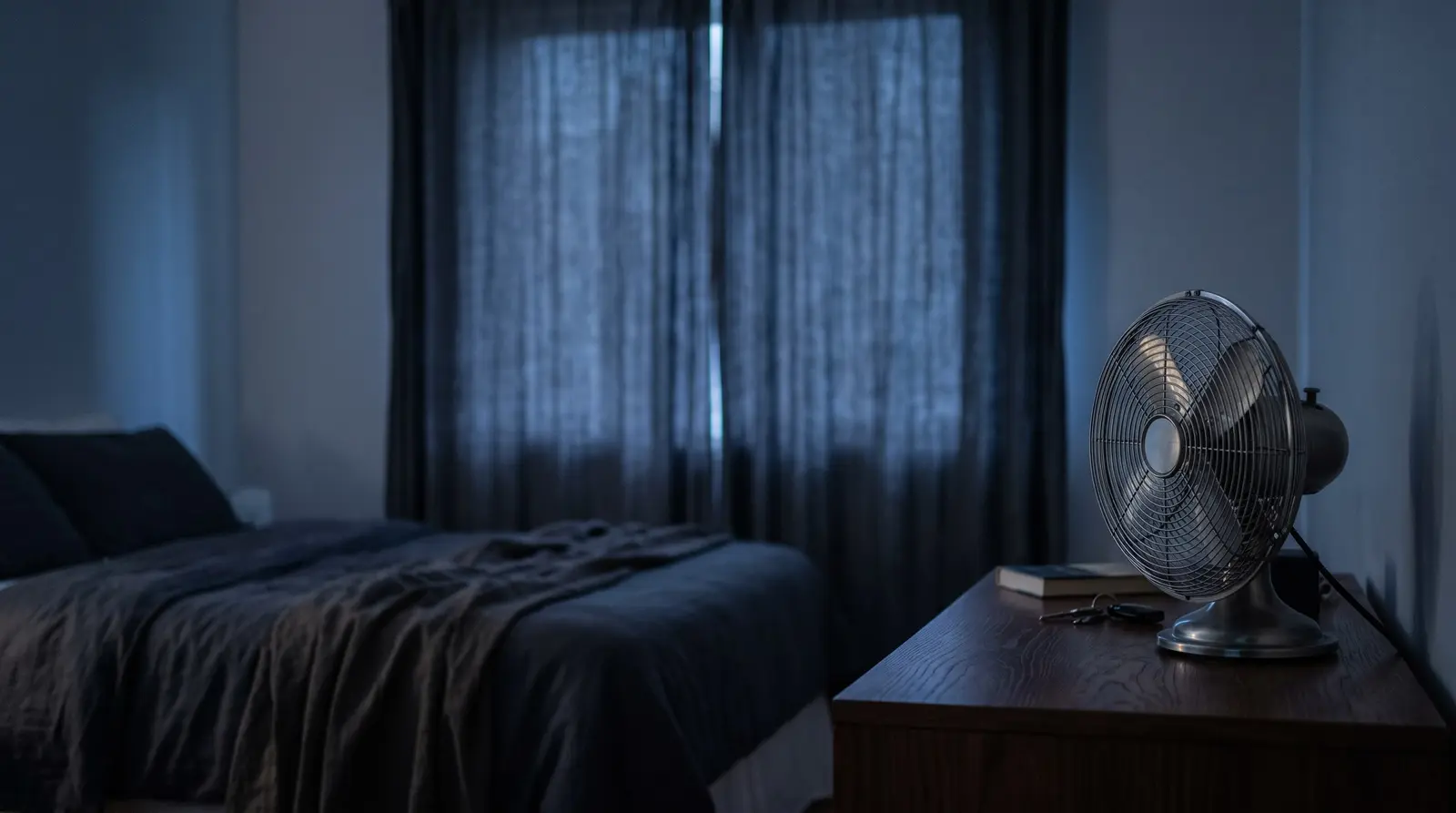
If noise wakes you, a fan, a soft steady sound or earplugs can mask it. The goal is a room that sounds the same from bedtime to morning.
Bed is for sleep: teaching your brain a new link
Your brain is great at pairing places with feelings. If you often scroll, work, eat or worry in bed, your bed can start to feel like a place to be alert.
Your bed is for sleeping. Do not do things like eat or work while in bed.
Rebuilding the link takes repetition. Keep your bed for sleep, and do everything else somewhere else, even reading if it keeps you turning pages.
What about phones and TV in bed?
Electronics in bed are a double hit: bright screens, plus content built to keep you watching. Try charging your phone outside the bedroom and using a simple alarm clock instead.
Love a show at night? Watch it on the couch, then head to bed once you feel sleepy.
What about the 10-3-2-1-0 rule and the 3 S's?
You may have seen the 10-3-2-1-0 rule, a popular countdown of cutoff times for caffeine, food, work and screens, plus a no-snooze morning. It's easy to remember, and its spirit is sound.
We couldn't find solid research behind its exact numbers, though.
The 3 S's are another memory trick. Guides fill them in a little differently, but they come back to the same core: a steady schedule, a calm space and a settled mind.
Building a 60-minute wind-down, step by step
A wind-down is a short routine you repeat every night. Dim light, warmth and familiar cues, repeated each night, can help your body learn that sleep comes next.
The steps matter less than the repeating. Here's one way to fill the hour, so swap in whatever calms you.
A 60-minute wind-down
- 60 minutes before
Dim the house
Lamps on, overhead lights off. Put on calm music or a podcast you've heard before.
- 45 minutes before
Warm shower or bath
Let the warm water be your signal that the day is done.
- 30 minutes before
Worry list
Write down anything on your mind and one small next step for each. Then close the notebook.
- 20 minutes before
Something slow
Read a paper book, stretch gently, or sip a caffeine-free tea in a chair, not in bed.
- 5 minutes before
Slow breaths
Lights off, breathe in for a count of four and out for a count of six.
- Bedtime
Sleep
Let your body take it from here.
For more ideas, see our bedtime routine guide for adults or these tips for a relaxing bedtime routine.


Pick a wind-down cue that suits you
Three simple cues, and how each fits into your evening.
A warm shower or bath
Warm water and a quiet bathroom mark a clean break from your day.
- Best for
- Busy evenings that need a clear ending
A familiar scent
A scent you only use at night, such as lavender, can become linked with winding down over time.
- Traditional use
- Bath products, perfumes and aromatherapy
A warm, caffeine-free cup
A slow, warm cup of a caffeine-free tea such as chamomile is a calming ritual in itself.
- History
- A medicinal herb in ancient China, Egypt, Greece and Rome
Can't fall asleep? What to do after 30 minutes
Lying in bed trying hard to sleep usually backfires. Effort wakes you up, and your bed slowly becomes a place of frustration.
MedlinePlus advises that if you can't fall asleep within 30 minutes, get up and move to another room [7]. You don't need to watch the clock to know: if it feels like a long time, it probably has been.
What to do once you're up
Go to a dim, quiet room with a comfy seat.
Do something calm and a little dull: a paper book, a puzzle, folding laundry.
Keep the lights low and leave your phone alone.
Head back to bed when your eyelids feel heavy, not before.
Some nights you'll do this more than once. That's normal, and it's how your brain relearns that bed means sleep.
Tips for falling asleep faster
Go to bed when you're sleepy, not just tired. Sleepy means heavy eyelids and nodding off, while tired can mean worn out but still wired.
How to stop clock-watching and quiet a racing mind
Checking the time at 2 a.m. starts a math problem: how many hours are left, how tired you'll be tomorrow. That math wakes you up even more.
Turn the clock around
Face your clock away from the bed and keep your phone out of reach. Set your alarm, then let it be.
Give your worries a place to land
MedlinePlus suggests writing down the things that worry you in a journal [7]. On paper, they no longer need to circle in your head all night.

Breathe slower than you think
Slow breathing, a short meditation or a simple mindfulness practice gives your mind one gentle thing to follow. Try breathing out a little longer than you breathe in, and notice the air at your nose.
If thoughts pull you away, that's fine. Notice it, and come back to the next breath.
There's more on this in why you can't turn off your mind at night.
Track your nights: a two-week sleep diary
Two weeks of simple notes can show patterns you'd never spot from memory. Maybe your worst nights follow a late coffee, or your best ones follow an evening walk.
Fill in one row each morning. It takes about a minute.

| Day | Bedtime | Time to fall asleep (your guess) | Times you woke | Wake time | Caffeine, alcohol or late meal? |
|---|---|---|---|---|---|
| Day 1 (example) | 10:45 p.m. | About 30 minutes | 2 | 6:45 a.m. | Coffee at 3 p.m. |
| Day 2 | |||||
| Day 3 to Day 14 | Same columns, one row a day |
After two weeks, look at what your best nights share. Those are the habits worth keeping.
After a bad night: getting back on track
A rough night happens to everyone. The goal the next day isn't to win back every lost hour. It's to protect tonight.

Three ways to handle the morning after
How each choice shapes the night that follows.
Sleeping in
It feels kind in the moment, but a late start pushes your whole day, and your next bedtime, later. Tonight you may not feel sleepy until well past your usual time.
- Trade-off
- More sleep now, a harder bedtime later
A long nap
A nap can soften the afternoon slump, but it also softens your drive to sleep at night. MedlinePlus suggests avoiding naps while you work on your sleep.
- Trade-off
- An easier afternoon, a lighter sleep drive at night
Your usual wake time
Get up at your normal time, step into daylight and keep your plans gentle. You'll likely feel sleepier at bedtime, which helps you find your rhythm again.
- Trade-off
- A slower morning, an easier night
Go easy on extra coffee, especially later in the day. And keep your wind-down the same, even if you're tempted to crash early.
If tiredness hangs around for days, our guide on why you might feel tired all day looks at common reasons.
Why habits alone may not fix ongoing sleeplessness
Good habits make sleep easier. But if your sleeplessness has gone on for a while, habits alone may not be the whole answer, and that isn't a failure on your part.
Long-running sleep trouble often has more than one thread: stress, worry, a body clock that has drifted, and sometimes a health reason. Sleep hygiene works best as one part of a bigger plan.
Where supplements fit alongside good sleep habits
Supplements can be one more piece of your evening, sitting on top of good habits rather than in place of them. Here's where the research stands on a few ingredients you'll often see in sleep formulas.
Two common ones are melatonin, a hormone tied to your natural sleep cycle, and vitamin B6, which supports normal nervous-system function. Our guide on melatonin for sleep goes deeper.

| Ingredient | What was studied | What was found |
|---|---|---|
| Chamomile | 12 randomized trials, pooled in one review | Better sleep quality overall. Research on insomnia itself is still very thin, and researchers want larger trials |
| Magnesium | 3 small studies, 151 participants, in older adults | Hints of falling asleep faster. The studies are small and early, so larger, longer trials are needed |
| Lavender | 65 randomized trials on lavender and anxiety, by mouth, by massage or by breathing in its scent | Lower anxiety scores, though most trials had a high risk of bias, so better-quality trials are needed. Research on its scent and sleep is still early, with no clear answer yet |
Chamomile: the classic bedtime cup
Part of chamomile's calm reputation may come from apigenin, a plant compound in its flowers.
A natural compound found in chamomile flowers.
In lab research, apigenin attaches to receptors, tiny docking spots on brain cells that help quiet nerve signals.
A warm cup and a slow moment fit naturally into your wind-down.
Magnesium: the mineral your nerves and muscles rely on
Magnesium is a mineral your body uses all day, and some of its key jobs are in your nerves and muscles. Here's how it works, step by step.
Citrate tends to be absorbed better than magnesium oxide. [6]
Magnesium helps more than 300 enzymes, the helpers that run your body's chemical reactions, do their jobs. [6]
It helps charged particles move in and out of your cells, so nerves can fire and muscles can contract and relax. [6]
Our guide to magnesium for sleep covers forms, foods and more.
Lavender: a scent your evening can learn
Lavender is promoted as a supplement for calm and stress [1], but you probably know it best as a scent.
Frequently asked questions
What could be causing me to wake up in the middle of the night?
Beyond the evening habits covered above, needing the bathroom is a common reason. Some causes are medical, and the safety notes at the end list them.
Can anxiety cause insomnia?
Yes, it can. If you've been diagnosed with an anxiety disorder, sleep trouble alongside it is very common. The safety notes at the end cover when to bring in a doctor.
Do sleep supplements like melatonin work?
It depends on the ingredient, because the research on each one is at a different stage. The table above sums up chamomile, magnesium and lavender, and our melatonin guide covers that hormone in depth. Your sleep diary can show whether anything you add makes a difference for you.
How long should I give new sleep habits?
Give any change at least the two weeks of a sleep diary before you judge it. Your body learns cues through repetition, so the first few nights may feel no different.
Do I need to follow my routine perfectly every night?
No. A late dinner out or a night with friends won't undo your progress. What counts is coming back to your usual rhythm the next evening.
Safety notes and when to see a doctor
Everything in this guide is meant to support healthy sleep habits. Here are the cautions worth knowing, all in one place.
Ingredient cautions
Chamomile: avoid it if you're allergic to ragweed, chrysanthemums, marigolds or daisies [3]. It may interact with blood thinners such as warfarin, some medicines processed by the liver and possibly sedatives, and it might make birth control pills less effective [3].
Lavender: it can irritate sensitive skin, so patch test a new soap or oil first. By mouth it may cause diarrhea, headache, nausea or burping, and it might interact with sedative drugs or herbs [1]. Little is known about its safety in pregnancy or while breastfeeding [1].
Magnesium: add up the magnesium from all your supplements and stay within the upper limit unless your provider recommends more [5]. High intakes can cause diarrhea, nausea and cramping [5]. The citrate form can also have a laxative effect at higher amounts.
Melatonin: keep to the label's use. It can cause next-day grogginess.
5-HTP: don't combine it with SSRIs, MAOIs or other serotonergic drugs without your doctor.
St. John's Wort: it interacts with many medications, so check with your doctor or pharmacist first.
Valerian and other sedating botanicals: don't combine them with alcohol or sedatives.
Your current medicines: ask your provider how any medicines and supplements you take may affect your sleep [7].
Questions to ask your doctor
Could any of my medicines be affecting my sleep?
Do my symptoms point to a sleep disorder worth testing for?
Is a sleep study right for me?
Would a structured insomnia program fit my situation?
Is this supplement safe with what I already take?
Bring your two-week sleep diary along. It turns "I sleep badly" into patterns your doctor can work with.
References
- Lavender: Usefulness and Safety. NCCIH (NIH).↩
- Effects of lavender on anxiety: A systematic review and meta-analysis (Phytomedicine, 2019). PubMed / Phytomedicine.↩
- Chamomile: Usefulness and Safety. NCCIH (NIH).↩
- Therapeutic efficacy and safety of chamomile for state anxiety, GAD, insomnia, and sleep quality: systematic review and meta-analysis (Phytother Res, 2019). PubMed / Phytotherapy Research.↩
- In the News: Magnesium Supplements for Sleep Disorders. NCCIH (NIH).↩
- Magnesium: Fact Sheet for Health Professionals. NIH Office of Dietary Supplements.↩
- Changing your sleep habits. MedlinePlus (NIH/NLM).↩
- Anxiety and Insomnia. Sleep Foundation.↩
These statements have not been evaluated by the Food and Drug Administration. This product is not intended to diagnose, treat, cure, or prevent any disease.



Comments
Sign in to join the conversation.
No comments yet. Be the first.