


What magnesium is and what it does for you
Magnesium is a mineral your body uses in hundreds of reactions every day. It helps run your muscles and nerves, and it helps keep your blood sugar and blood pressure steady [2].
So when you feel tired but wired at night, magnesium is a smart place to start.
When you shop for a magnesium for sleep supplement, you'll find it in several forms. Each one acts a little differently in your body.
Which magnesium is best for sleep?
Here's a quick comparison of the forms you'll see most often on the shelf.
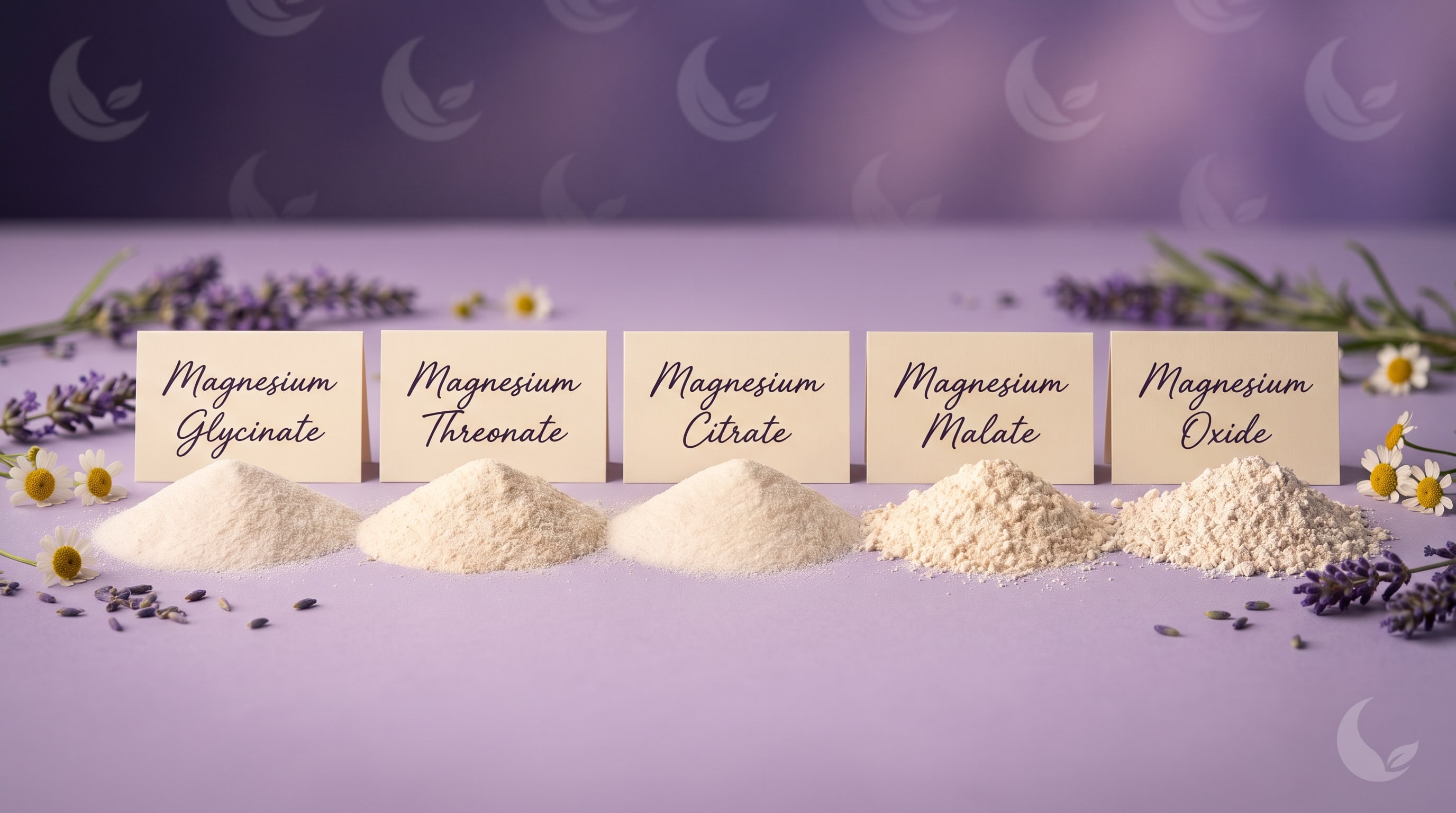

Magnesium forms at a glance
Each form acts a little differently in your body.
Magnesium glycinate
The form most often recommended for sleep, and it's generally gentle on your stomach. It's the magnesium in Deep Drift.
- Known for
- Most often recommended for sleep
- Your stomach
- Generally gentle
- In Quietova
- Deep Drift
Magnesium citrate
Your body absorbs citrate more easily than some other forms. It's the magnesium in Drift.
- Absorption
- Easier than some other forms
- In Quietova
- Drift
Magnesium oxide
A common form that your body finds harder to absorb.
- Absorption
- Harder for your body
Aspartate, lactate and chloride
NIH lists these among the forms your body absorbs more easily.
- Absorption
- Easier, per NIH
Which magnesium is best for sleep and muscles?
If you want support for both rest and tight muscles, glycinate is a natural pick. On our Deep Drift label, magnesium glycinate supports muscle relaxation, the nervous system and healthy sleep patterns.
Citrate paired with vitamin B6 is another good route. In Drift, magnesium citrate and vitamin B6 support normal muscle and nervous-system function.
Foods that bring more magnesium to your plate
Before you reach for a bottle, look at your plate. Beans, nuts, seeds, whole grains and leafy greens like spinach are all good sources, and so are fortified cereals and dairy [2].
Here's the nice part. The magnesium in food and drinks isn't harmful, and you don't need to limit it [2].

Best magnesium for sleep for women: start with your daily need
If you're a woman, NIH puts your daily need at 310 to 320 mg from all sources, food included. Men need a bit more, 400 to 420 mg [2].
So let food cover what it can, then let a supplement fill the gap. Glycinate is a gentle place to begin, since it's the form most often recommended for sleep and is easy on your stomach [4].
Your needs shift if you're pregnant or nursing. Check with your doctor before you add anything during those times.
Is magnesium good for sleep? What research suggests
Magnesium has become a social media favorite, thanks in part to the “sleepy girl mocktail” [1]. But what does the research say for your nights?
A systematic review looked at 8 sleep studies, and 5 of them reported better sleep [5]. The authors concluded that magnesium is likely helpful for sleep, especially if your magnesium runs low, with few side effects [5].
If you're older and sleep doesn't come easily, a 2021 review summarized by NCCIH suggested magnesium may help you fall asleep faster [1].
Another review of 9 studies on magnesium supplementation for sleep included small studies that showed gains in how you rate your sleep, how well you sleep and how long you sleep [1]. Researchers now want larger trials lasting more than 12 weeks to find the best forms and doses [1][5].
How magnesium may help your mind settle
Experts are still mapping exactly how magnesium shapes sleep [4]. Researchers think it may influence GABA, a calming brain messenger, and NMDA, a type of receptor that helps nerve cells pass signals [4].
That ties back to magnesium's everyday job of helping your nerves work [2].
Magnesium and your sleep hormones
Magnesium may also play a part with melatonin, the hormone that tells your body it's night [4]. That's one more reason researchers keep studying it for rest.
How magnesium may help you wind down
Magnesium helps run your muscles and nerves every day. [2]
Researchers think it may influence GABA, a calming brain messenger. [4]
It may also influence NMDA, a receptor that helps nerve cells pass signals. [4]
Magnesium may also play a part with melatonin, the hormone that tells your body it's night. [4]
Who may benefit most from magnesium for sleep?
The research points to one group above all: you, if your magnesium runs low [5].
NIH says you're more likely to fall short if you have a digestive condition, type 2 diabetes or long-term alcohol use, or as you get older [2]. If any of these fit you, a quick talk with your doctor can show whether a supplement makes sense.
Magnesium for sleep vs. melatonin
These two do different jobs. Magnesium is a mineral your body uses all day for nerves and muscles [2], while melatonin encourages your natural sleep cycle.
So you don't have to pick a side. Deep Drift is our melatonin-free night option, and our Drift capsules pair magnesium with melatonin.
Curious about the melatonin side? See when to take melatonin or our full melatonin routine guide.
How to take magnesium for sleep
Here's how our two night products line up, straight from the labels.
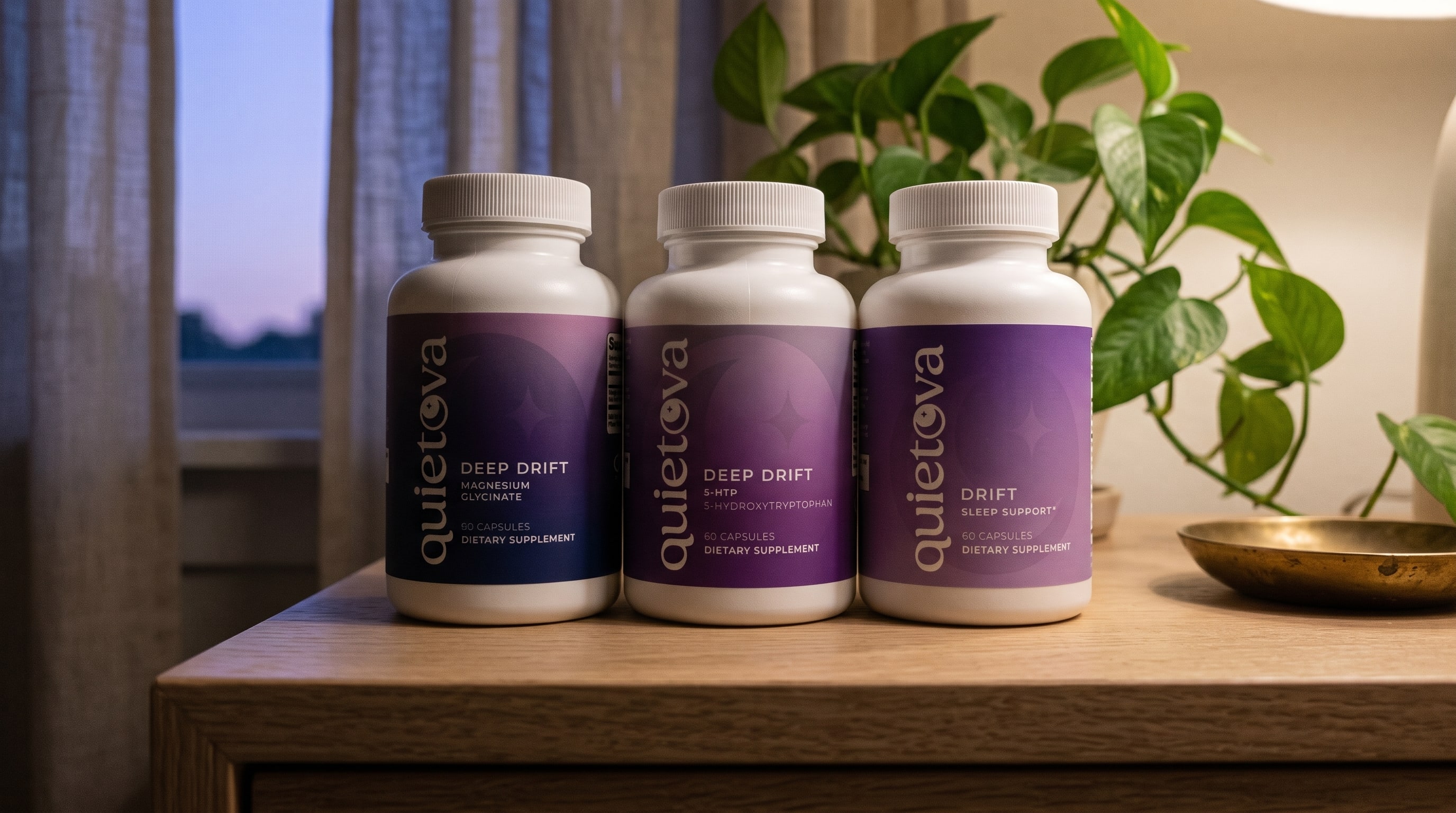
| Deep Drift | Drift | |
|---|---|---|
| Magnesium form | Magnesium glycinate | Magnesium citrate |
| Magnesium on the label | 275 mg elemental magnesium (from 2,500 mg magnesium glycinate) per 3 capsules | Contains magnesium citrate |
| Paired with | 5-HTP, plus calcium (as calcium carbonate) in the 5-HTP capsules | Vitamin B6, calcium, melatonin and a calming botanical blend |
| Serving | Magnesium Glycinate: 3 capsules daily. 5-HTP: 2 capsules daily. | Two capsules 20 to 30 minutes before bed |
| Melatonin | Melatonin-free | Contains melatonin |
When should you take magnesium for sleep?
Some experts suggest taking magnesium before bed, at the same time every day [4]. Steady timing turns it into part of your night, not a guessing game.
Drift's label calls for two capsules 20 to 30 minutes before bed. Deep Drift's serving is daily, so pick an evening time you can repeat.
How long does magnesium take to work?
Give it a few weeks [4]. One night won't tell you much, so be patient with yourself and your routine.

How much magnesium should you take for sleep?
NIH sets the adult upper limit for supplemental magnesium at 350 mg a day, counting every supplement and medicine you take [2]. Deep Drift's 275 mg of elemental magnesium per 3 capsules sits under that line.
Your doctor can help you set the right amount for your age, health and diet [4].
How to read a magnesium supplement label
Form. Look for the word after “magnesium,” like glycinate or citrate.
Elemental amount. The Supplement Facts panel lists elemental magnesium, the mineral itself, not the weight of the whole compound [3]. That's why Deep Drift shows 275 mg elemental from 2,500 mg magnesium glycinate.
Serving size. Check how many capsules make that amount. For Deep Drift, it's 3 capsules.
Other ingredients. Scan the list below the panel so you know everything you're taking.
Reading the Deep Drift label
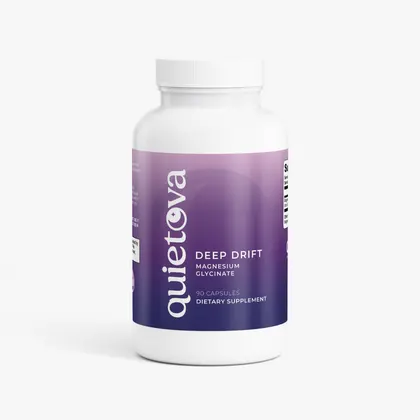
- Form Magnesium glycinate, the form most often recommended for sleep. [4]
- Elemental amount 275 mg elemental magnesium, the mineral itself. [3]
- Whole compound 2,500 mg magnesium glycinate is the weight of the whole compound. [3]
- Serving size 3 capsules give you that 275 mg.
- Its partner 2 5-HTP capsules daily, which also contain calcium as calcium carbonate.
Tablets, capsules, powders or gummies?
Magnesium tablets for sleep, capsules, powders and gummies can all bring magnesium into your night. The best format is the one you'll take every evening without fuss.
Whatever you choose, compare the elemental amount on each label so you're comparing fairly [3].
A 30-minute wind-down built around your magnesium
Good sleep habits matter too. So give your magnesium a calm routine to land in.
Your evening, step by step
- 30 min before bed
Take your capsules
Drift's label calls for two capsules 20 to 30 minutes before bed. Keep your bottle where you'll see it.
- 25 min
Dim the lights
Switch from overhead lights to a lamp. Let your space feel like evening.
- 20 min
Park your phone
Set it to charge across the room. Your messages can wait until morning.
- 15 min
Warm up and slow down
A warm shower or a cup of caffeine-free tea gives your body a cue to unwind.
- 5 min
Jot and breathe
Write tomorrow's to-do list, then take a few slow breaths.
- Lights out
Same time each night
A steady bedtime helps the whole routine stick.
Want more ideas? Our look at the science of winding down walks you through it.
Common mistakes when you start magnesium
Changing your timing every night. Pick one time and stick with it [4].
Stacking several products. Antacids, laxatives and sleep formulas can all contain magnesium, and together they can push you past 350 mg a day [2]. Count them all.
Expecting instant results. Give it a few weeks before you decide how it fits [4].
Skipping the basics. Food, light and a steady bedtime still do a lot of the work.

Track your nights with a two-week sleep journal
A simple journal shows you how a new supplement fits your life. Spend two weeks writing a few lines each morning.
What time you took your magnesium
When you went to bed and when you woke up
How rested you felt, on a scale of 1 to 5
Caffeine, alcohol, late meals or screen time
Any stomach changes, so you can adjust with your doctor
Bring it to your next checkup. It turns a vague feeling into notes you and your doctor can read together.
Is magnesium safe to take every night?
Magnesium from food needs no limit [2]. With supplements, a few simple checks keep you comfortable.
Questions to bring to your doctor or pharmacist
Could my magnesium be low, and should we check it?
How much supplemental magnesium is right for me?
Could magnesium interact with anything I take now?
How much magnesium am I already getting from food?
And if you snore loudly, wake up gasping, or poor sleep lasts for weeks, ask about a sleep study. Those signs deserve a closer look.

Where you'll find magnesium in Quietova
We built magnesium into both of our night products, each in its own way.
Deep Drift: magnesium glycinate plus 5-HTP
Our Deep Sleep Stack is a melatonin-free nightly option. It gives you 275 mg elemental magnesium from 2,500 mg magnesium glycinate per 3 capsules.
So how does magnesium glycinate work for sleep? On our label, it supports muscle relaxation, the nervous system and healthy sleep patterns, and it's the form most often recommended for sleep [4].
Its partner is 5-HTP from Griffonia simplicifolia seed, a building block your body turns into serotonin. 5-HTP supports normal serotonin levels, and serotonin is the precursor to melatonin, so the pair supports your night without added melatonin.
The 5-HTP capsules also contain calcium, as calcium carbonate. Your serving is 3 magnesium glycinate capsules plus 2 5-HTP capsules daily.
One note on 5-HTP: don't take it with SSRIs, MAOIs or other serotonergic drugs without your doctor.
Drift: magnesium citrate with melatonin and botanicals

Drift, our nightly sleep support, pairs magnesium citrate and vitamin B6, which support normal muscle and nervous-system function, with melatonin to encourage your natural sleep cycle. It also contains a calming botanical blend with chamomile, lemon balm, passion flower and L-theanine to help you unwind.
Keep melatonin to label use, two capsules 20 to 30 minutes before bed, since it can cause next-day grogginess. The blend also contains St. John's Wort, which interacts with many medications, so check with your doctor if you take any.
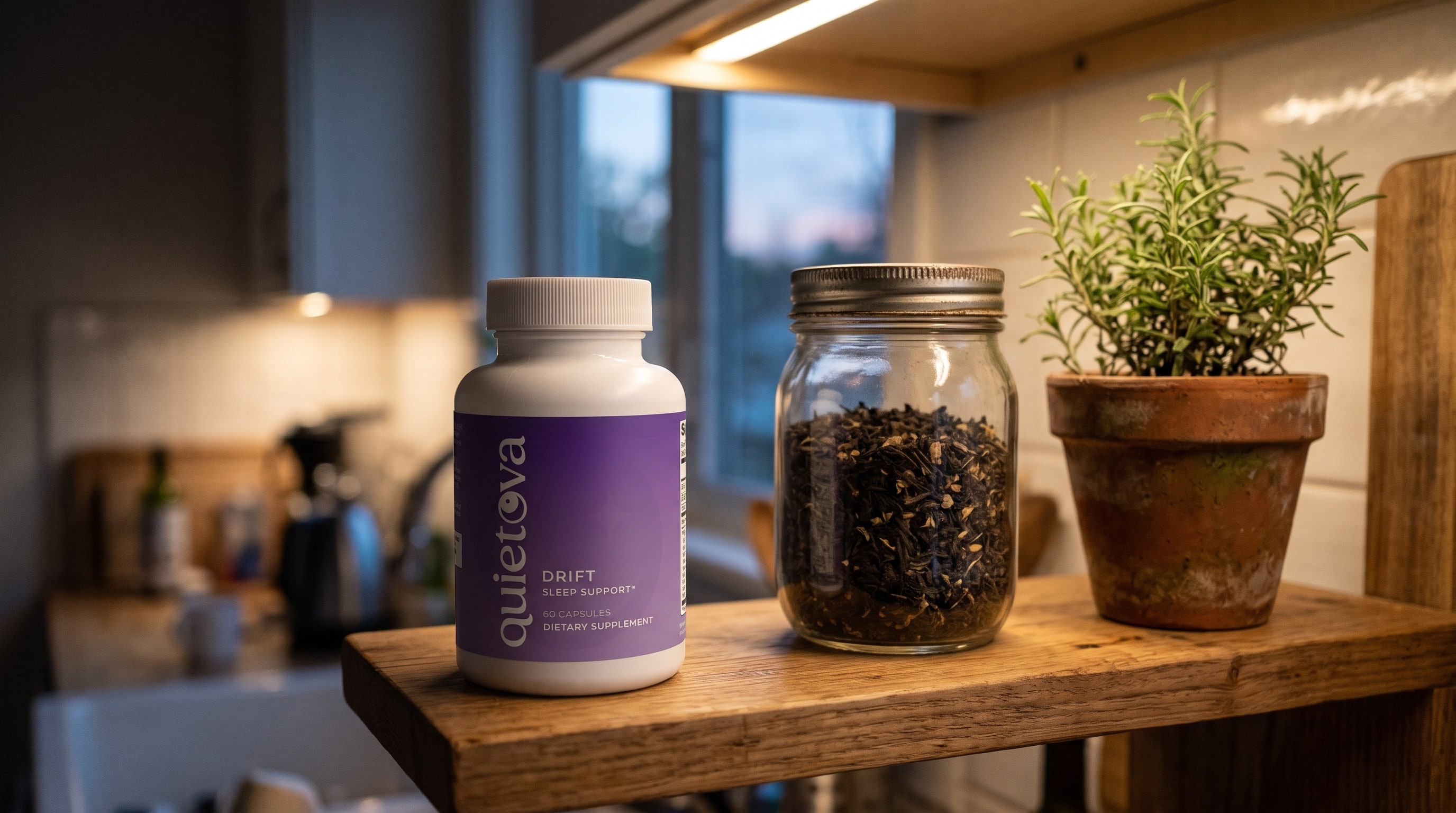
Daytime calm vs. nighttime sleep support
Good days help good nights. That's why we keep calm-by-day and sleep-by-night in separate products, so each one fits its moment.
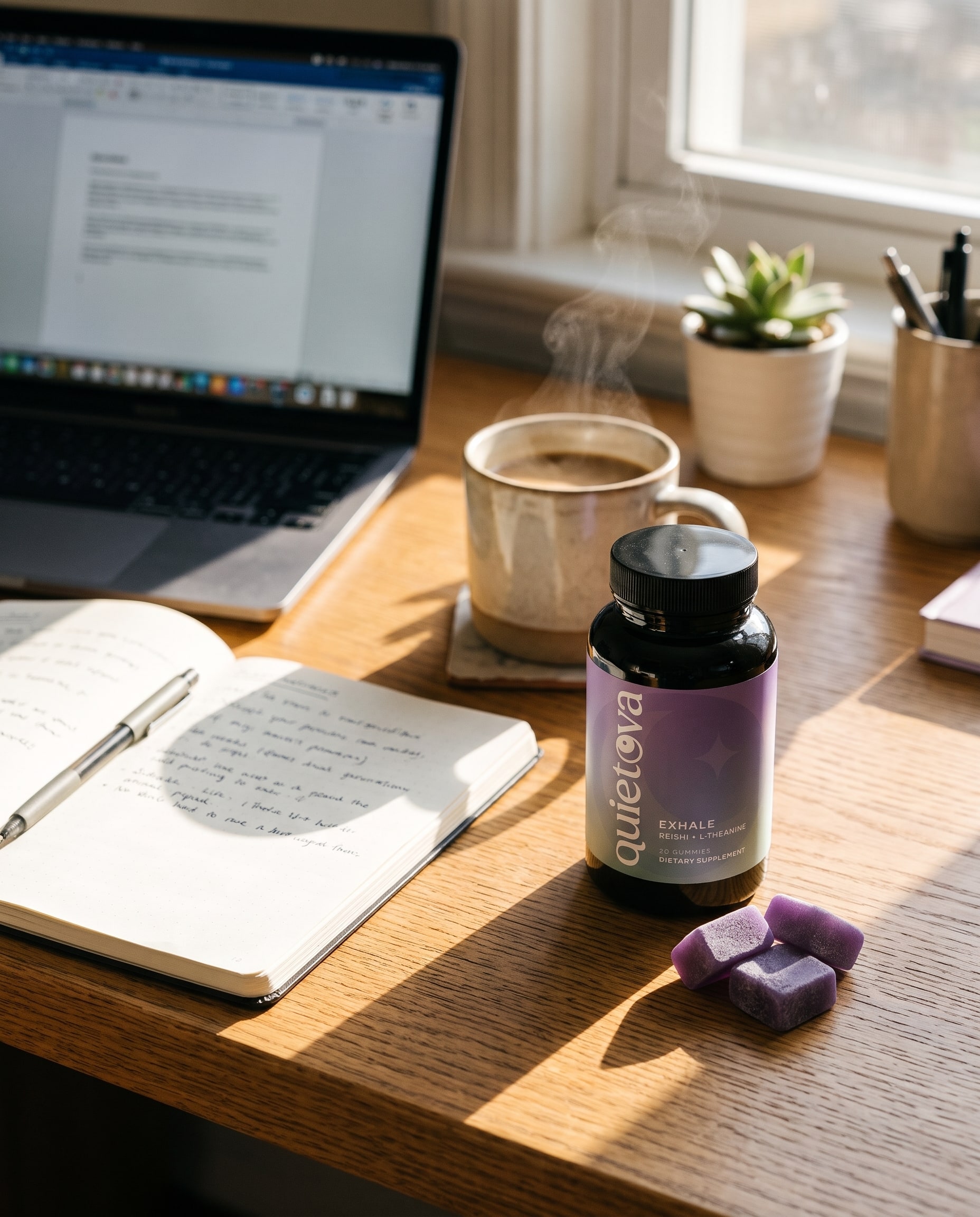
Exhale, our daytime calm gummy, is the complement. Its label lists 200 mg reishi mushroom extract, 25 mg L-theanine, and 25 mg each of lemon balm, passion flower and valerian root, with 1 to 2 blackberry gummies daily.
Exhale supports calm through busy days and a healthy response to occasional stress. Because it contains valerian root, don't take it with alcohol or sedatives.
For a wider view, visit our ingredient-by-ingredient guide to natural sleep aids.
Which one fits your nights?
Three quick questions about how you like your routine.
Deep Drift could fit your nights
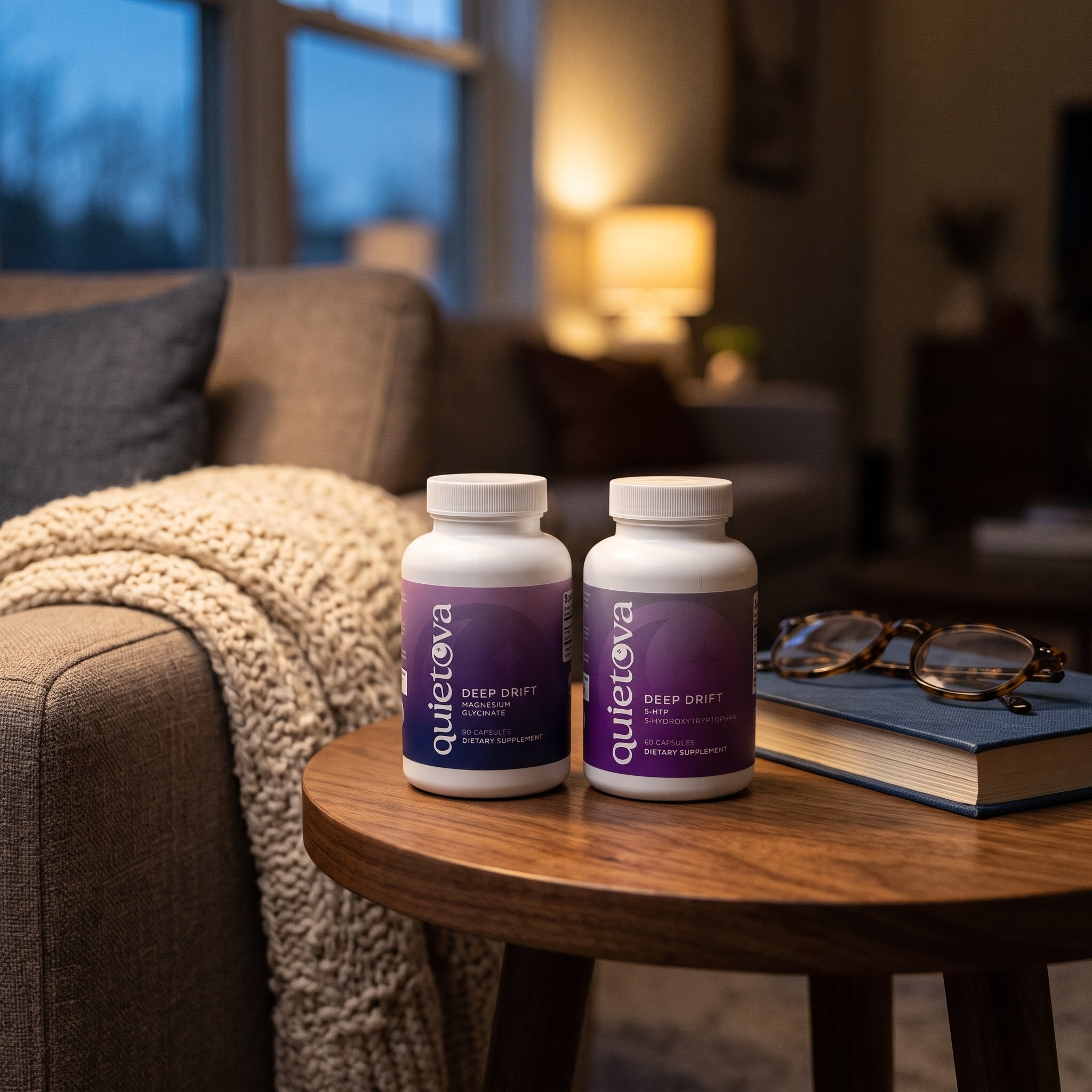
The Deep Sleep Stack: magnesium glycinate plus 5-HTP, a melatonin-free nightly option. It gives you 275 mg elemental magnesium (from 2,500 mg magnesium glycinate) per 3 capsules. Magnesium glycinate supports muscle relaxation, the nervous system and healthy sleep patterns.
Label serving: The Deep Sleep Stack: Magnesium Glycinate (3 capsules daily) + 5-HTP (2 capsules daily).
Good to know: Don't take 5-HTP with SSRIs, MAOIs or other serotonergic drugs without your doctor.
See Deep DriftDrift could fit your nights
Nightly sleep support: melatonin, magnesium and vitamin B6 with a calming botanical blend. Magnesium citrate and vitamin B6 support normal muscle and nervous-system function. Melatonin encourages the natural sleep cycle. Calming botanicals help you unwind.
Label serving: Two capsules 20–30 minutes before bed.
Good to know: Keep melatonin to label use, since it can cause next-day grogginess. The blend contains 5-HTP, so don't take it with SSRIs, MAOIs or other serotonergic drugs without your doctor. It also contains St. John's Wort, which interacts with many medications, so check with your doctor if you take any.
See DriftAdd Exhale to your days
Supports calm through busy days. Supports a healthy response to occasional stress.
Label serving: 1–2 gummies daily (blackberry).
Good to know: Because it contains valerian root, don't take it with alcohol or sedatives.
See ExhaleThis matches your preferences to our labels. It isn't medical advice. If you are pregnant or nursing, under 18, taking medication or have a medical condition, consult your physician before use.
Frequently asked questions
Is 120 mg of magnesium glycinate enough for sleep?
Research hasn't set one sleep dose, so no single number fits everyone. First check whether your label's 120 mg is elemental magnesium, since Supplement Facts panels list the elemental amount. Either way, it sits well under the 350 mg daily upper limit for supplements, and your doctor can help you choose your amount.
Can you take magnesium if you're on metformin?
That's a question for your own care team, so we won't guess either way. NIH notes that magnesium can interact with some medicines, and that type 2 diabetes can make your body lose more magnesium in urine. Bring your supplement to your doctor or pharmacist and ask before you start.
Why don't doctors recommend magnesium?
Doctors often want large, long studies before suggesting something for sleep, and researchers are calling for trials lasting more than 12 weeks. Your doctor also looks at your whole picture: your diet, your health and what you already take. So ask yours directly, since magnesium may be a good fit, especially if your levels run low.
Can magnesium help with anxiety?
In one review, 5 of 7 studies reported improvements in self-reported anxiety. For everyday calm, our Exhale gummies support a healthy response to occasional stress. If worry feels constant or heavy, talk with your doctor about the right support for you.
Can you take magnesium and melatonin together?
You can, and Drift does just that, with magnesium citrate, vitamin B6 and melatonin in one nightly serving. Keep melatonin to label use, since it can cause next-day grogginess. If you'd rather skip melatonin, Deep Drift is our melatonin-free option.
References
- In the News: Magnesium Supplements for Sleep Disorders. NCCIH (NIH).↩
- Magnesium – Fact Sheet for Consumers. NIH Office of Dietary Supplements.↩
- Magnesium – Health Professional Fact Sheet. NIH Office of Dietary Supplements.↩
- Magnesium for Sleep: Benefits, Types, Dosage, and Side Effects. Sleep Foundation.↩
- Examining the Effects of Supplemental Magnesium on Self-Reported Anxiety and Sleep Quality: A Systematic Review. Cureus / PMC (peer-reviewed).↩
These statements have not been evaluated by the Food and Drug Administration. This product is not intended to diagnose, treat, cure, or prevent any disease.

Comments
Sign in to join the conversation.
No comments yet. Be the first.