


Why a calm bedtime routine works
Your body loves a pattern. When you do the same quiet things in the same order each night, your brain starts to link them with sleep.
A bedtime routine is exactly that: a set of activities you do in the same order, every night, in the 30 to 60 minutes before bed [1].
Even the small steps count. Putting on your pajamas and brushing your teeth the same way each night can reinforce in your mind that it's bedtime [2].
Pajamas, teeth, low light and one calm activity, night after night. [2]
Over time, those steps stop being chores and start to mean bedtime.
A steady schedule helps train your brain to feel tired at bedtime. [1]
That's the whole idea. You're not forcing sleep. You're giving your body clear, steady signals and letting it do what it already knows how to do.
Curious about the deeper science? Our piece on how winding down helps you fall asleep faster goes further.
What a relaxing bedtime routine looks like for you
There's no single right routine. Yours might be tea and a book, or a shower, a stretch and lights out.
What matters is that each step is calm, you enjoy it, and it happens in about the same order. It helps to think in three parts: switch off the day, soften your body, then settle into bed. Our guide to a bedtime routine for adults shows how these parts fit a full evening.

Why does this matter so much? A routine draws a clear line between your busy day and your rest.
Without one, the day can run right up to the moment your head hits the pillow.
A 60-minute relaxing bedtime routine, step by step
Here's a sample calm hour you can shape to fit your night. Each step is timed back from your bedtime, so it works whether you sleep at 10 or at midnight.
Your calm hour before bed
- 60 min before
Lights low, then a warm bath or shower
Switch from overhead lights to lamps, set your phone to charge away from the bed, and let warm water loosen your shoulders.
- 40 min before
A small snack or herbal tea
Only if you're hungry. Keep it light and caffeine-free.
- 30 min before
Tidy up and get tomorrow onto paper
Lay out clothes, write a short to-do list, and let the day rest on the page.
- 20 min before
Stretch and breathe
A few gentle stretches, then slow breaths that ease the tight spots.
- 10 min before
Teeth, pajamas, a few pages
Do your hygiene steps in the same order, then read a paper book under a soft lamp.
- Bedtime
Lights out
Settle in. If sleep doesn't come, the gentle plan further down has you covered.
Treat this as a menu, not a rulebook. Keep the steps you like, swap the ones you don't, and keep the order steady.
Calming habits to build your routine around
Pick a bedtime and a wake time
Choose a bedtime you can really keep, and a wake time to match, even on weekends [1]. A routine works best when it starts at about the same time each night.
Screens away, lights low
Light is one of the strongest signals your brain reads. Bright light can hinder melatonin, the hormone your body makes in the evening to help you feel sleepy [2].
Screens add to it. Their blue light can lead your brain to hold back melatonin and work to stay awake [1].
An easy fix: give your phone a spot to charge outside the bedroom, and switch to a lamp for your last hour.

A small snack or a warm cup of tea
If you're hungry, a little something beats a heavy plate. Any food before bed should be on the lighter side [2].
A caffeine-free herbal tea, such as chamomile or lavender, is another calm step [1]. Keep coffee, cola and black or green tea to earlier in your day.

A warm bath or shower, early on
A warm soak is one of the oldest ways to wind down. Plan it near the start of your routine, with the gap shown in the timing chart up top, so you have time to dry off and cool down in a dim room [1].

Save hard workouts for earlier
Moving your body during the day is a gift to your evening. But an intense workout right before bed can feel like the opposite of winding down, so keep late evenings to gentle stretches.
Get tomorrow onto paper
If tomorrow's tasks keep circling, write them down. A short list gives your mind permission to stop rehearsing.
Some nights a few lines of journaling feel better: what went well, what's on your mind, and one thing you can set down until morning.
Set up your room for rest
Make your bedroom a place you want to sleep in: dark, quiet and comfortable. Close the curtains and set out what you need before your routine begins, so the last steps are easy.
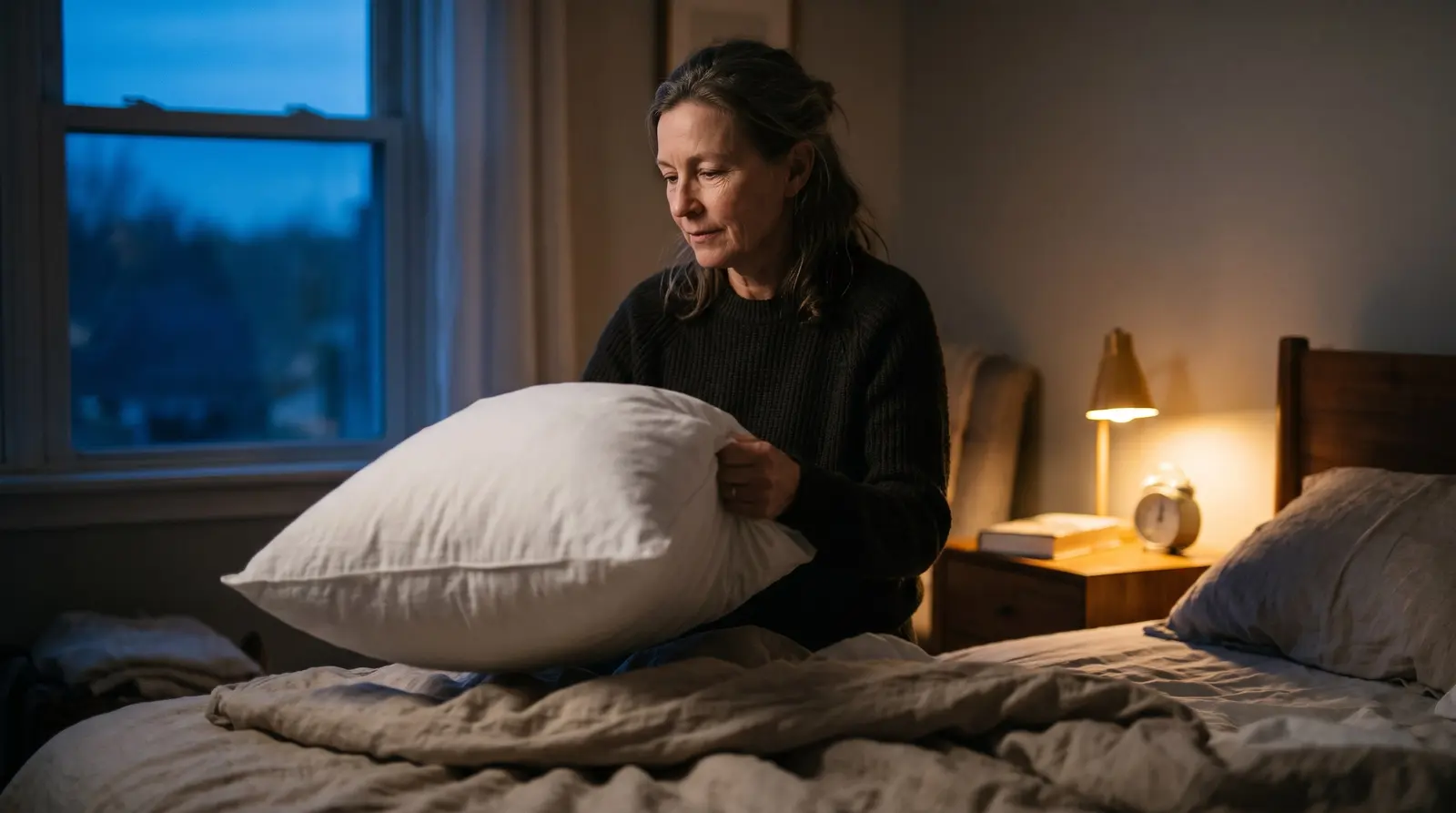
How to relax before sleeping
Once your body is warm and the lights are low, it's time to quiet the inside. Deep breathing and progressive muscle relaxation, or PMR, can help release both physical and mental tension [1].
Choose the one that feels most natural tonight. You can always switch tomorrow.


Five ways to relax before sleep
Each takes about 5 to 10 minutes. Try one a night and notice which you look forward to.
Slow belly breathing
Breathe in through your nose for a count of four and feel your belly rise. Breathe out slowly for a count of six. Repeat for a few minutes.
Tense, then let go
Starting at your toes, tighten one muscle group for a few seconds, then release it. Work slowly up your body to your face.
Picture a calm place
Imagine a quiet place in detail: the light, the sounds, the air on your skin. When your mind wanders, walk back into the scene.
Notice, don't fix
Rest your attention on your breath. When a thought shows up, notice it, let it pass, and come back.
Slow, familiar sound
Play quiet music you know well, with no lyrics if words keep you thinking. Set it to stop on its own.

If your thoughts are the part that won't settle, our guide to quieting a racing mind, day and night goes deeper.
Use scent as a wind-down cue
Scent can be a strong signal. When the same calm smell shows up at the same point every evening, it can become part of the pattern that says bedtime is near.
Lavender is the classic choice. It has long been used in bath products, perfumes and aromatherapy [3], so a lavender soap or body wash in an evening shower is a simple way to add a scent cue.

Hygiene steps are a natural home for it. Washing up and changing clothes already happen every night, so pairing a scent with them helps the cue feel easy, not extra.
A 10-minute relaxing routine for busy or late nights
Some nights you get home late, or the evening simply runs away. A short routine still keeps the pattern going, and the pattern is the point.
Your 10-minute wind-down
- 10 min before
Dim and set down
Lamps on, overhead lights off, phone charging away from the bed.
- 7 min before
Wash up
Face, teeth, pajamas, in your usual order.
- 4 min before
Ten slow breaths
Let each out-breath be a little longer than the in-breath.
- Bedtime
Lights out
The day is done. Let it be.

Keep at least one piece of your full routine, like the same scent or the same breaths. That way your body still recognizes the cue, even on a rushed night.
If sleep won't come, get up for a bit
Lying in bed fighting to fall asleep can turn your bed into a place of worry. A gentler way: if 20 minutes pass and you're still awake, get up and stretch, read or do something calm in low light [2].
Head back to bed when you feel sleepy. It sounds simple, but it keeps your bed tied to rest, not to effort.
Adapting your routine for weekends, travel and shift changes
Life won't follow your plan every night. The goal is to keep the core of your routine, even when the details change.

Keep your routine when life shifts
A few ways to keep the cue going in each situation.
Keep your anchors
Stay close to your usual bed and wake times. After a later night out, run your 10-minute version when you get home.
Pack your cues
Bring the small things that say bedtime: your soap or tea, a book, a familiar playlist. Then run your steps in the same order in a new room.
Tie it to sleep, not the clock
If your sleep time moves, your routine moves with it. Do the same steps before every main sleep, and block daylight with heavy curtains or a sleep mask.

How long until a routine feels automatic?
There's no magic number of nights.
And missing a night doesn't reset you. Just pick it back up the next evening.
A simple weekly check-in
Once a week, take two minutes to notice how your routine feels. You're not grading yourself, just learning what helps you.

| Ask yourself | What to notice | Try next week |
|---|---|---|
| How many nights did I do it? | Count nights, not perfect nights | Aim for one more |
| Which step did I look forward to? | The step you enjoy is your anchor | Keep it every night |
| Which step did I skip? | It may be too long or too late | Shorten it or move it earlier |
| How did my mornings feel? | Energy, mood, how hard it was to get up | Jot down any patterns |
| Did screens sneak back in? | When it happened, and why | Move the charger farther away |
Common bedtime routine mistakes that undo the calm
Scrolling 'just for a minute.' A phone in bed brings bright light and busy thoughts right back.
Bright bathroom light at the last step. Brushing your teeth under strong light can undo your dimming, so a small night light is kinder.
Watching the clock. Checking the time when you can't sleep tends to add worry. Turn the clock away from you.
Working right up to bedtime. One last email keeps your mind in day mode.
Turning the routine into a to-do list. If every step feels like a chore, cut back to the ones you enjoy.
Calming ingredients the research looks at
Your evening might include a warm tea, a scented soap or a supplement. Here's what the most common calming ingredients are, why they're used, and what the research says so far.
Lavender: a scent with a long history
Lavender's name comes from the Latin word for to wash, and it has long been part of bath time [3]. Today it's also promoted for calming stress [3].
The research leans toward calm. A 2019 review looked at 65 randomized trials.
When the researchers pooled the trials that tested breathing in lavender, with 1,682 people in all, breathing in lavender lowered anxiety scores [4]. But most of the trials had a high risk of bias, meaning their design could skew the results [4].
For sleep itself, NCCIH says the benefit of lavender aromatherapy is still unclear and calls for more high-quality research [3]. So lavender shines as a pleasant, familiar scent that can become your signal to slow down.
Chamomile: the classic bedtime tea
Chamomile was an important herb in ancient China, Egypt, Greece and Rome [5].
A 2019 review of 12 randomized trials found a significant improvement in sleep quality after chamomile [6]. The trials were small, and the authors say larger ones are needed [6].
Magnesium: a mineral your nerves and muscles rely on
Magnesium comes in several forms, and some are easier for your body to absorb. Citrate is one your body absorbs more easily than magnesium oxide [8].
Sleep research on magnesium is early. A review of 3 small studies with 151 older participants hinted that magnesium may help with falling asleep, while a review of 9 studies found mixed results [7].
NCCIH says there isn't yet enough rigorous research to know for sure [7]. For adults, the recommended daily amount ranges from 310 to 420 mg, depending on age and sex, counting food and supplements [8].
Fitting a supplement into your routine
If you choose one, make it one more step in your routine. Follow the timing on its label and take it at the same point each night, such as right after brushing your teeth.
Frequently asked questions
What are some tips for a healthy bedtime routine?
Build it slowly. Start with two or three steps from the calm hour above, then add one new step at a time, so the routine feels like yours instead of a chore.
Why do I wake up at 4am every night?
Early waking can have more than one cause, so start by noticing what wakes you, such as a full bladder or a busy mind. For a busy mind, a steady routine and the 20-minute rule above are good places to begin. If it keeps happening, see the safety notes at the end.
Is it okay to read in bed as part of my routine?
Yes, as long as it stays calm. A paper book under a soft, low lamp keeps the light gentle, while a bright tablet brings back the glow you're trying to avoid. Choose something you enjoy but can easily put down.
Can I keep a routine if I share a bedroom?
You can. Most steps, like a shower, tea, stretching or journaling, happen outside the bed. Agree with your partner on lights and phones in the room, and use a small book light for your last few pages.
Safety notes and when to see a doctor
The steps in this guide are gentle. Still, a few cautions are worth knowing before you add a scent, tea or supplement to your evening.
Lavender
Chamomile
Magnesium
Other ingredients in sleep blends
St. John's Wort interacts with many medications.
Don't take 5-HTP with SSRIs, MAOIs or other serotonergic drugs without your doctor.
Keep melatonin to the label's directions. It can cause next-day grogginess.
Don't combine valerian or other sedating botanicals with alcohol or sedatives.
Before you start any supplement
If you are pregnant or nursing, under 18, taking medication or have a medical condition, consult your physician before use. Little is known about lavender or chamomile during pregnancy or breastfeeding [3][5].
References
- How to Build a Better Bedtime Routine for Adults. Sleep Foundation.↩
- Mastering Sleep Hygiene: Your Path to Quality Sleep. Sleep Foundation.↩
- Lavender: Usefulness and Safety. NCCIH (NIH).↩
- Lavender and anxiety: systematic review and meta-analysis (Phytomedicine, 2019). PubMed (NLM/NIH).↩
- Chamomile: Usefulness and Safety. NCCIH (NIH).↩
- Efficacy and safety of chamomile for state anxiety, GAD, insomnia, and sleep quality: systematic review and meta-analysis (Phytother Res, 2019). PubMed (NLM/NIH).↩
- In the News: Magnesium Supplements for Sleep Disorders. NCCIH (NIH).↩
- Magnesium: Health Professional Fact Sheet. NIH Office of Dietary Supplements.↩
These statements have not been evaluated by the Food and Drug Administration. This product is not intended to diagnose, treat, cure, or prevent any disease.



Comments
Sign in to join the conversation.
No comments yet. Be the first.