


Why winding down together can feel so hard
Sharing sleep sounds simple. Then one of you is wide awake at 11, the other is fading by 9:30, and somebody always wants the window open.
None of that means your relationship is off track. It means two bodies with two sets of habits are trying to land in the same place at the same time.
What usually pulls your nights apart


Different body clocks
One of you is a night owl, the other an early bird, and your natural bedtimes sit far apart.
Hot vs. cold
One of you kicks off the covers while the other reaches for a second blanket.
Snoring and tossing
Every snore, turn or late trip down the hall can wake whoever is next to you.
Screens and leftover stress
Scrolling in bed, or replaying the day out loud, keeps both of your minds busy right when you want them quiet.
Here's the good news. Your body learns from repetition, and that works just as well for two.
Lamps on, overheads off, well before bed.
A warm shower, a bath or a soft blanket.
The same scent, song or goodnight words each evening.
A steady routine of dim light, warmth and the same cues can become a signal that sleep comes next. Do it side by side, and the cues work on both of you at once.
Want the fuller picture? Our guide to a bedtime routine for adults walks through each step.
How your evenings shape the way you feel together
The last hour of the day is often the only unhurried time you two get. What you do with it shapes how you fall asleep, and how close you feel when you do.
Going to bed together, even a few nights a week, opens a natural window for closeness: talking, touching, or just lying side by side with no screen in between.
Habits that quietly pull you apart
Both on phones in bed, side by side but miles away.
Bringing up money, chores or old arguments at lights-out.
One of you staying up late every night with no plan to reconnect.
Dozing off on the sofa and stumbling to bed hours later.

Free habits that help you wind down together tonight
You don't need to overhaul your evenings. Pick two or three of the habits below and repeat them for a couple of weeks.
Agree on a regular routine, not a perfect one
Before you change anything, have one calm talk about sleep. Ask each other: When do you feel sleepy?
What wakes you up? What helps you relax?

You'll likely want different things. That's normal, and useful, because a routine you both helped shape is one you'll both keep.
Then start small. Add one habit at a time and check in after a week about what's working.
Make your bedroom work for both of you
Set the room up for the lighter sleeper: cool, dark and quiet. Then adjust the bed so each of you is comfortable.

Three ways to set up a shared bed
Pick the one that fits how you two sleep.
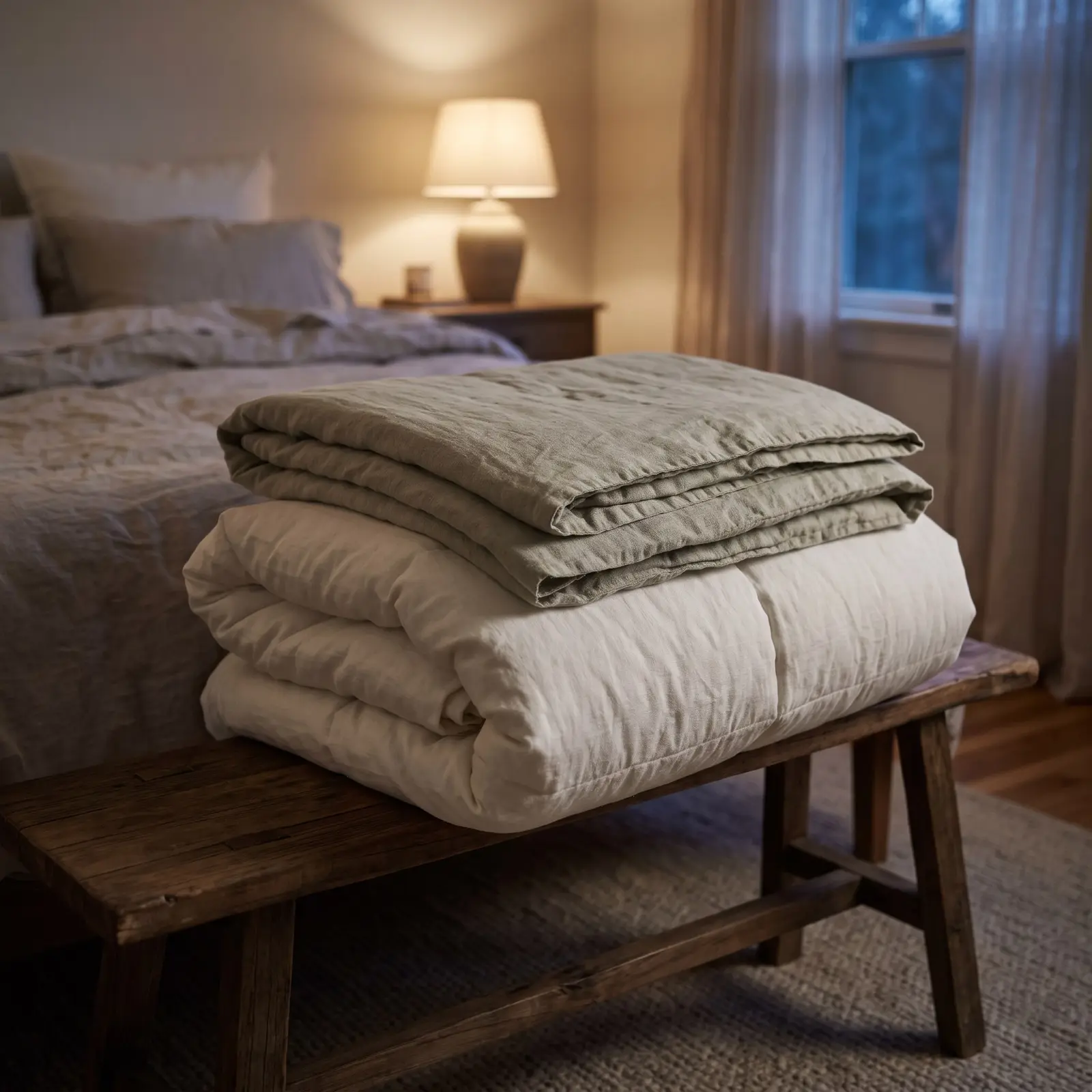
Sharing one duvet
Simple and cozy. It works best when you run at similar temperatures and nobody tugs the covers.
Separate duvets, same bed
Each of you picks your own weight and warmth. One person turning over no longer pulls the covers off the other.
Different sides, different needs
Lighter sheets or a small fan on the warm side, an extra throw on the cold side. A mattress that limits motion may help if you feel every turn.
If one of you wakes with the sun, blackout curtains or a soft sleep mask keep early light from cutting the night short.
Put the screens away together
Screens make it easy to stay up later than either of you planned. And scrolling side by side isn't the same as being together.
So make it a shared rule. Pick a time, park both phones outside the room, and use a simple clock if you need an alarm. A shared charging spot makes it a team rule, not a fight.
If your thoughts get louder once the phone is gone, here's how to quiet a busy mind at bedtime.
Touch, talk and thanks: small rituals that bring you closer
A short massage
A five-minute shoulder or foot rub is an easy way to slow down together. Take turns and keep it gentle.
Lavender oil is a popular pick. Massage with lavender oil looked helpful for anxiety in studies, but researchers couldn't tell whether that came from the lavender itself [2]. The touch is the part you share either way.

Pillow talk and daily thanks
Keep lights-out talk light: the best moment of your day, or something you're looking forward to. Then name one thing your partner did today that you noticed.
Make time to cuddle
A few minutes close together, then move to the position you each sleep best in. Nobody has to stay wrapped up all night.
A shared shower or bath as your bedtime cue
A warm shower or bath is one of the simplest cues you can share. Take turns, or soak together, at the same point each evening.
A calming scent makes the cue stronger. Lavender's scent has long been used in bath products, perfumes and aromatherapy, and its name comes from the Latin for to wash [1].
Smell the same scent at the same time every night, and it becomes a signal you both link with bedtime.

A 30-minute bedtime routine for couples you can copy
Here's a simple half-hour plan, counted back from bedtime. Slide it earlier or later to fit your evening.
Your 30-minute wind-down together
- 30 min before
Lights down, phones away
Switch to lamps and park both phones outside the bedroom.
- 25 min before
Quick reset
Set out tomorrow's things and fill two water glasses together.
- 20 min before
Warm shower or bath
Take turns, with the same calming scent each night.
- 10 min before
Pillow talk and thanks
One good moment, one thank-you each.
- 5 min before
Cuddle, then settle
A few minutes close, then into your own sleep spots.
- Bedtime
Lights out
Same goodnight words, most nights.
Your body follows the order as much as the clock. Keep the steps the same, even when the time shifts a little. For more calm steps to add, see our guide to a relaxing bedtime routine.
When one of you is a night owl and the other an early bird
Body clocks differ. Force one shared bedtime, and one of you may lie awake while the other fights to stay up.

Three ways to handle different bedtimes
Each keeps the closeness. They just time it differently.
Shift toward each other
The night owl heads to bed a little earlier, the early bird stays up a little later. Move in small steps so it feels natural.
Share the wind-down, not the bedtime
Do the routine together and lie down side by side for a while. Then the night owl slips out quietly to read in another room.
Make mornings your time
If evenings never line up, let a slow coffee together at the start of the day be your shared ritual.
Whichever you choose, keep the shared part: the same cues and the same goodnight, even if one of you stays up after.
Snoring and different wake times
You can share a room and still protect each other's rest. Match the fix to the problem.
Snoring: earplugs or a soft white-noise machine on the lighter sleeper's side.
Different wake times: the early riser lays clothes out the night before and dresses in another room.
Loud, regular snoring is worth a closer look. The safety notes at the end cover when.
When a sleep divorce makes sense

A sleep divorce just means sleeping in separate rooms, some or all nights, so you both get rest. It isn't a verdict on your relationship.
If you've tried the fixes above and one of you still isn't resting, separate rooms can be a kind choice. Keep the wind-down together and plan nights or mornings to share the bed.
Keep the goodnight, even if you keep separate rooms.
When one of you can't fall asleep
Lying awake next to a sleeping partner can feel lonely. And tossing to get comfy can wake them too.
Agree on it ahead of time. Getting up is fine, and nobody has to explain.
Leave a soft light ready in another room, so the bedroom stays dark.
Keep a calm spot waiting: a chair, a blanket, a paper book or puzzle.
Do something low-key until you feel sleepy, then slip back in quietly.
Keeping the routine going on busy nights, travel and shift work
Life won't always give you thirty minutes. On those nights, shrink the routine instead of skipping it.
The 10-minute version for busy nights
- 10 min before
Phones down, lamps on
Same first step as always.
- 7 min before
Quick warm rinse
A short shower or a warm washcloth with your usual scent.
- 3 min before
One thank-you
One line each. That's enough.
- Bedtime
Lights out
Your usual goodnight.
When you travel
Bring your cues along: the same scent, a familiar pillowcase, the same goodnight words. They make a strange room feel like bedtime.
When one of you works shifts
Match the wind-down to one schedule and protect it. If one of you comes home as the other wakes, a shared breakfast can stand in for bedtime.

Lavender, chamomile and magnesium: what the research says
You might add a bedtime tea or supplement to your wind-down. Here's where three common ingredients stand, in plain terms.
Lavender
Lavender is promoted for calming stress [1]. One 2019 review found inhaled lavender lowered anxiety, though the authors rated the average study quality as low [2].
Whether the scent helps sleep itself is still an open question [1].
Chamomile
Chamomile was an important medicinal herb in ancient China, Egypt, Greece and Rome [3]. A 2019 review of 12 small trials found chamomile improved sleep quality, and the authors say larger trials are needed [4].
Magnesium
Magnesium is a mineral you get from food and supplements. Here's how it works in your body.
For sleep, the studies so far are small. A 2021 review of three studies in older adults who had trouble sleeping suggested magnesium may shorten the time it takes to fall asleep, though the reviewers called the studies low quality [5].
Thinking about any of these? Read the safety notes at the end first, especially if either of you takes medicine.

Frequently asked questions
What is the 72-hour intimacy rule?
It's a phrase shared online, usually meaning you shouldn't let more than about three days pass without real closeness. It isn't a sleep or health guideline, and we didn't find research behind the number. A nightly wind-down simply makes closeness easier to keep.
What are the 5 don'ts before bedtime?
There's no official list, but here are five we'd skip together: arguing at lights-out, scrolling in bed, bright overhead lights, a heavy late meal and working from the bed. Each one keeps you busy right when you want to slow down.
What is the perfect bedtime routine for adults?
There isn't one perfect routine. Start with two or three calm steps you both enjoy, like dim lamps, a warm shower and a paper book, and add more once those feel easy.
How do you sleep at night with a partner?
Give it time, especially with a new partner, since sharing a bed is a skill you learn together. Mention what bothers you early, before it builds up, and treat earplugs or an extra blanket as normal, not a complaint.
Is a cup of tea together before bed a good idea?
A small, caffeine-free cup can be a lovely shared moment. If a full bladder wakes you, sip it early in your wind-down.
Safety notes and when to see a doctor
A gentle routine is low-risk. But anything you take is worth a quick check. Here it all is in one place.
Lavender
Chamomile
Magnesium
For adults, the upper limit for magnesium from all supplements and medicines combined is 350 mg a day; magnesium from food doesn't count toward it [7].
Too much can cause diarrhea, nausea and cramping [5], and citrate can have a laxative effect at higher amounts.
Magnesium can keep some antibiotics and bisphosphonates from being absorbed if taken too close together [7].
Other common sleep ingredients
Melatonin: keep to label use. It can cause next-day grogginess.
5-HTP: don't combine it with SSRIs, MAOIs or other serotonergic drugs without your doctor.
St. John's Wort: it interacts with many medications.
Valerian and other sedating botanicals: don't combine them with alcohol or sedatives.
References
- Lavender: Usefulness and Safety. NCCIH (NIH).↩
- Effects of lavender on anxiety: A systematic review and meta-analysis (Phytomedicine, 2019). PubMed (NIH/NLM).↩
- Chamomile: Usefulness and Safety. NCCIH (NIH).↩
- Therapeutic efficacy and safety of chamomile for state anxiety, GAD, insomnia, and sleep quality: systematic review and meta-analysis (Phytother Res, 2019). PubMed (NIH/NLM).↩
- In the News: Magnesium Supplements for Sleep Disorders. NCCIH (NIH).↩
- Magnesium: Fact Sheet for Health Professionals. NIH Office of Dietary Supplements.↩
- Magnesium: Fact Sheet for Consumers. NIH Office of Dietary Supplements.↩
These statements have not been evaluated by the Food and Drug Administration. This product is not intended to diagnose, treat, cure, or prevent any disease.



Comments
Sign in to join the conversation.
No comments yet. Be the first.