

NMN vs NAD+ vs NR at a glance
If you're weighing NMN vs NAD+, it helps to see the whole family in one place. NR (nicotinamide riboside) belongs here too, since it's the third name you'll keep running into.

| NAD+ | NMN | NR | |
|---|---|---|---|
| What it is | The finished coenzyme, a helper molecule your cells use | Nicotinamide mononucleotide, a building block | Nicotinamide riboside, a form of vitamin B3 |
| Size | Largest of the three | Smaller | Smallest |
| Steps to NAD+ | None, it's already NAD+ | One step | Two steps (becomes NMN first) |
| Forms you'll see | Capsules, liposomal, IV | Capsules, powders | Capsules, IV |
| Human research | Early | Small trials, up to 24 weeks | Small trials |
One way to picture it: NAD+ is the destination, and NMN and NR are vehicles that carry your body there. For the bigger picture, our guide to what NAD+ is covers what it does in your body. The rest of this guide explains why the difference matters for what you swallow.
What is NAD+, and why does it matter to you?
NAD+ stands for nicotinamide adenine dinucleotide. It's a coenzyme, a helper molecule that lets enzymes do their work, and every tissue in your body uses it [1].
Your body builds NAD+ from forms of niacin (vitamin B3), including nicotinic acid, nicotinamide and nicotinamide riboside [1]. It can also make some from tryptophan, an amino acid in the protein you eat [1]. Then it puts NAD+ to work making energy, as the path below shows.
NAD in food is turned into nicotinamide, a form of vitamin B3, before it's absorbed. [1]
Every tissue turns absorbed niacin back into NAD, its main working form. [1]
NAD helps shift the energy in carbs, fats and protein into ATP, your cells' energy currency. [1]
In your mitochondria, the tiny power plants in each cell, NAD+ and NADH carry electrons into the energy-making chain. [2]
Why NAD+ falls as you age
Studies show the NAD+ in your tissues and cells declines with age [3].

What is NMN, and does your body turn it into NAD+?
NMN, short for nicotinamide mononucleotide, is one of the building blocks your body uses to make NAD+. So yes, your body turns it into NAD+, and the path below shows how.
Gut microbes and first-pass processing, the work your liver does on anything you swallow, break some of it down, so the amount converted varies. [3]
NMN is small enough to cross cell membranes, so it can get inside where NAD+ is made and used. [3]
Your cells turn it into NAD+, and NAD+ in your blood peaks about 3 to 8 hours after a dose. [3]

The differences that matter
Swallowed NAD+ is first broken into smaller pieces, such as NMN, NR and nicotinamide, which your cells take in and build back into NAD+ [3].
There's also a rules question. In November 2022, the FDA said NMN couldn't be sold as a dietary supplement, because it had been approved for study as a new drug [1]. Rules like this can change, so check where NMN stands today.
So which raises NAD+ levels more effectively? We found no study testing NMN against oral NAD+ head to head. What's clear is that both feed the same NAD+ your cells rely on.
Capsules, liposomal or IV: does the route matter?
Beyond the molecule, you'll see three ways to take it. Here's what's known about each, from NMN vs liposomal NAD+ to NAD+ injections vs NMN supplements.

Three ways to take it
How each route gets NAD+ or its building blocks into your body.
Capsules and powders
The simplest way to take NMN, NR or NAD+, and the most studied for NMN and NR.
- Best studied for
- NMN and NR
Liposomal NAD+
Liposomal means the NAD+ is wrapped in tiny fat bubbles called liposomes, meant to protect it on the way in. We found no human studies on liposomal NAD+, so there's no evidence yet that it beats regular NAD+ or NMN.
- Human studies found
- None
NAD+ by IV drip or injection
IV NAD+ skips the conversion steps by going straight into your blood, but how it moves through your body and its long-term effects are poorly understood. In one infusion study, blood NAD+ changed little at first while its breakdown products rose, which points to fast processing.
- Where offered
- Wellness clinics
- Human data
- Limited
Reviewers call IV NAD+ in wellness clinics controversial, because rigorous clinical evidence is lacking [6]. What it can feel like is covered in the safety notes at the end.
What the human research shows so far
Here's where the human studies stand, plainly.
In those trials, physical performance improved a little, but not by enough to rule out chance [4]. The studies were also too different from each other to pool into one result [4].
A separate review found NMN tends to raise NAD+ in your blood, but whether it improves how your body works is less clear [5].
What you'd feel day to day is still being worked out, for NMN and for NAD+.
Do NMN or NAD+ supplements affect your sleep?

One 12-week trial in older adults looked at NMN alongside sleep quality, tiredness and physical performance [4]. That's only one study, so there isn't enough research to say NMN or NAD+ helps or harms your sleep.
If your mornings feel heavy, your sleep is still a good place to start. Our look at why you might feel tired all day walks through the common reasons.
How food and daily habits shape your NAD+
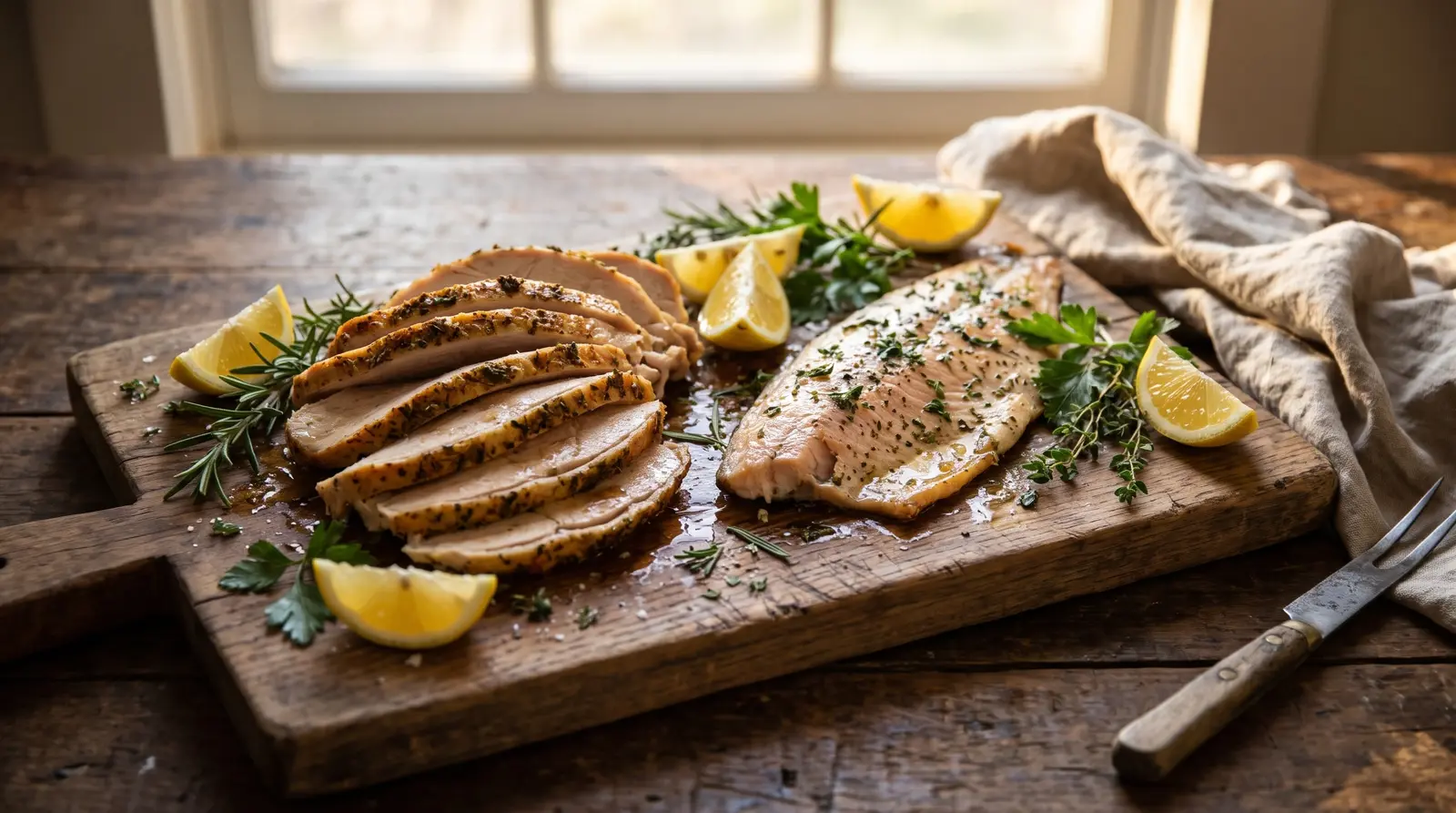
You don't need a supplement to make NAD+. Poultry, beef and fish supply niacin mostly as NAD and NADP, forms your body takes up easily [1].
Free habits that support healthy energy
Protect your sleep. A steady bedtime and a calm wind-down set up your next day. Our simple bedtime routine shows one way to build it.
Move most days. A walk, a bike ride or a few stretches all belong in a steady energy routine.
Build meals around protein. Protein-rich meals give your body more of the raw material it uses for NAD+.
NMN or NAD+: which suits you?
There's no single best pick. Whichever you lean toward, the label tells you most of what you need to know.
What to check on an NMN or NAD+ label

Which molecule it is. NAD+, NMN and NR aren't the same thing, so make sure the label names the one you want.
Dose per serving. Check how many capsules make one serving, since the amount listed may cover more than one.
The form. Capsule, powder or liposomal, matched to how you like to take things.
Third-party testing. An independent lab check confirms what's on the label is in the bottle.
Extras. See what else is added alongside the main ingredient.

Frequently asked questions
Can you take NAD and niacinamide together?
Niacinamide is a form of vitamin B3, the vitamin your body uses to build NAD. See the safety notes at the end before you pair them.
Which food is highest in NMN?
We couldn't find a trusted source that measures NMN in everyday foods, so we won't guess. The foods that carry NAD itself, covered above, are the better-documented choice.
Can I take NMN and NAD+ together?
The safety notes at the end cover this. Check them before you combine the two.
Safety notes and when to see a doctor
NMN caused no serious side effects in trials [4]. It looks safe for up to 24 weeks [5], and lab tests stayed normal [7]. But only a few safety trials have been done in people [7].
IV NAD+ is a different story. In one small clinic study, all 6 patients given IV NAD+ had moderate to severe cramping, diarrhea, nausea or vomiting, plus a faster heart rate and chest pressure [3].
References
- Niacin - Health Professional Fact Sheet. NIH Office of Dietary Supplements.↩
- Dietary Supplements for Primary Mitochondrial Disorders - Health Professional Fact Sheet. NIH Office of Dietary Supplements.↩
- Intravenous infusion of NAD+ versus nicotinamide riboside (NR): a retrospective tolerability pilot study in a real-world setting (Front Aging 2026). PubMed Central / Frontiers in Aging.↩
- Improved Physical Performance Parameters in Patients Taking NMN: A Systematic Review of Randomized Control Trials (Cureus 2024). PubMed Central / Cureus.↩
- Dietary Supplementation With NAD+-Boosting Compounds in Humans: Current Knowledge and Future Directions. PubMed Central (peer-reviewed review).↩
- NAD+ biology and supplementation: From mechanisms to clinical perspectives. PubMed Central (peer-reviewed review).↩
- Safety evaluation of β-nicotinamide mononucleotide oral administration in healthy adult men and women. PubMed Central / Scientific Reports.↩
These statements have not been evaluated by the Food and Drug Administration. This product is not intended to diagnose, treat, cure, or prevent any disease.



Comments
Sign in to join the conversation.
No comments yet. Be the first.