

What is a NAD+ supplement?
NAD+ is short for nicotinamide adenine dinucleotide. It's a coenzyme, a helper molecule that an enzyme needs before it can do its job.
Your body builds NAD+ from niacin, also called vitamin B3 [1]. And your body uses a lot of it.
What does NAD+ actually do in your body?
Its best-known job is energy. The path runs from your plate to your cells, and NAD+ sits right in the middle of it.
Your meals bring in niacin, or vitamin B3, the raw material. [1]
Your body turns that niacin into NAD+. [1]
NAD+ helps your enzymes pull the energy out of carbs, fats and protein. [1]
That energy is passed to ATP, the small molecule your cells spend like cash. [1]
Energy isn't its only job. NAD+ also helps maintain your DNA, switch genes on and off, and let your cells talk to each other [1].
You never feel any of this directly. It's quiet background work that keeps going while you eat, move and sleep.
So what's in a NAD+ supplement?

A NAD+ supplement is any product meant to raise the NAD+ in your body. Some give you NAD+ itself. Others are a NAD precursor supplement, which gives you a building block your body turns into NAD+.
You'll also see the term NAD booster supplement. It usually means a precursor, or any blend sold to raise your NAD+ levels.
For the wider story of this molecule, our complete guide to what NAD+ is goes deeper.
Does NAD+ really drop as you get older?
You've likely read that your NAD+ falls with age. It's an idea you'll see in a lot of NAD+ marketing.
The research is less settled than those ads suggest. A review in the journal Nutrients found the evidence for an age-related drop is very limited, and often based on a single tissue or cell type [2].
In humans especially, how NAD+ changes across a lifetime is still poorly understood [2]. So yours may dip with time, or it may not. The science can't say for sure yet.

NAD+, NR, NMN and niacin: the main forms
Look along a supplement shelf and you'll find four main ways to raise NAD+. Three are precursors. One is NAD+ itself.
Niacin is the oldest name in the group. It covers nicotinic acid, nicotinamide, and related compounds such as nicotinamide riboside, or NR [1].


The four forms, side by side
What each one is and where it stands.
NAD+ itself
The finished coenzyme, with no building step needed.
- Steps to NAD+
- None, it's already NAD+
- Human research
- Early, with few trials so far
Nicotinamide riboside (NR)
A niacin-related compound your body turns into NAD+. It's one of the most studied options.
- Family
- Vitamin B3 (niacin)
- Human trials
- Several, mostly small and short
Nicotinamide mononucleotide (NMN)
A close cousin of NR.
- Research so far
- Mostly in cells and animals
Nicotinic acid and nicotinamide
The classic forms of vitamin B3.
- Where you get it
- Food, plus some vitamin pills
NR vs NMN: what's the difference?
NR and NMN are close cousins on the road to NAD+. For you, the biggest difference is legal, not chemical.
The FDA ruled in November 2022 that NMN may not be legally marketed as a dietary supplement in the US [1].
NMN or NAD supplement: how to decide

If you're torn between NMN and a NAD+ supplement, that ruling settles a lot in the US.
Beyond that, think about the path each one takes. A precursor asks your body to do the last steps. A direct NAD+ capsule holds the finished molecule itself.
Our side-by-side on NMN versus NAD+ has more detail if you want it.
Does a NAD supplement work? What the research says
Here's the plain picture. The table below shows where the human research stands so far.
Most human trials so far have tested NR, NR paired with a plant compound called pterostilbene, and NMN [4].

| What you might hope for | Where the research stands |
|---|---|
| Higher NAD+ in your blood | Shown in human trials of NR and NMN |
| More energy you can feel | Not shown consistently in human trials yet |
| Lower risk of disease | Unknown; no study has shown that raising NAD+ with precursors changes it |
Human trials: three to know
These are the studies that come up most when you look into NAD+ boosters. Each one tells you something a little different.

Three human trials
Each study, who was in it, and what changed.
NR in healthy, overweight volunteers
A randomized, double-blind trial compared NR with a placebo for 8 weeks. Blood NAD+ rose within 2 weeks, and rose more at higher doses. Some of the authors were linked to the company that makes the NR they tested.
- Volunteers
- 140
- Length
- 8 weeks
- Main finding
- Higher blood NAD+, by dose
NR in a small memory study
Twenty older volunteers with mild memory problems took NR or a placebo for 10 weeks. NR raised their blood NAD+, and the authors say a larger, longer trial is needed.
- Volunteers
- 20
- Length
- 10 weeks
- Main finding
- Higher blood NAD+; more study needed
NMN in healthy volunteers
NMN raised the NAD+ in blood serum, the clear liquid part of your blood. No clinical benefits were seen.
- Main finding
- Higher NAD+, no clinical benefit seen
How to read a study like this
A few words help you judge any trial you read about. Randomized means volunteers were sorted by chance. Placebo-controlled means one group got a dummy pill for comparison.
Double-blind means neither the volunteers nor the researchers knew who got what. That keeps hopes from shaping the results.
Size and length matter too. The trials above are a real start, but they're small and short. They can't yet tell you how you'll feel over months or years.

Do NAD+ supplements work when you take them by mouth?
This is the key question for any oral NAD supplement. When you eat NAD in food, your gut breaks it down to nicotinamide, a simple form of vitamin B3, before you absorb it [1].
We didn't find a study that tracked a NAD+ capsule through the gut the same way. Here's the path NAD from food takes, and why it isn't a dead end.
What we don't know yet is how a direct NAD+ capsule compares with a precursor for raising NAD+ inside your cells. We didn't find a human trial that tested the two head to head.
Is a liposomal NAD supplement better than a regular capsule?
Liposomal means the NAD+ is wrapped in tiny fat bubbles called liposomes. The idea is to shield it on its way through your gut.
It's a sensible idea. But we couldn't find a trusted study comparing liposomal NAD+ with a regular capsule in humans, so we can't tell you one beats the other.
Where NAD+ shows up in your everyday life
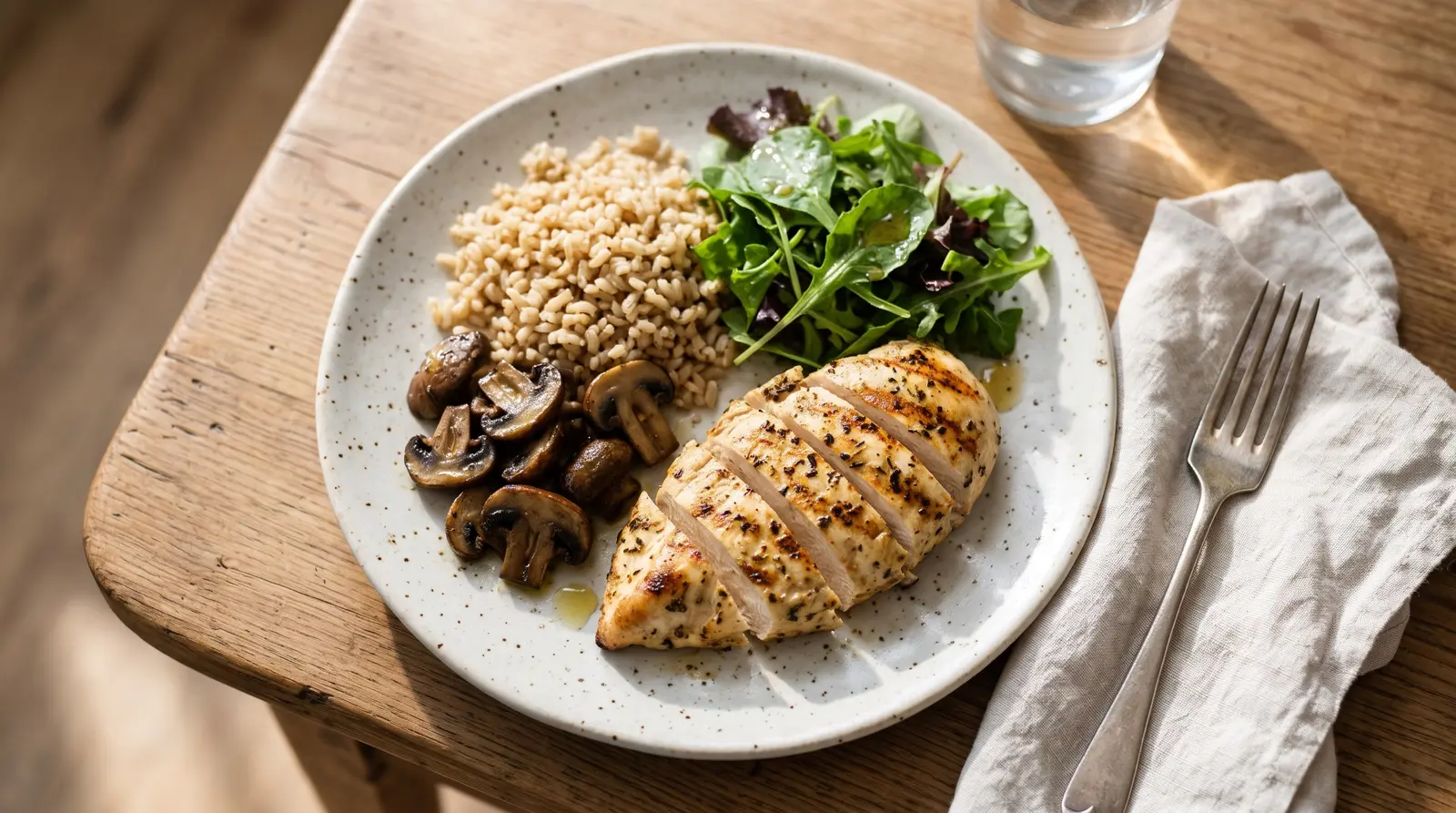
NAD+ isn't something you only find in a bottle. It's part of your day from your first meal on.

Niacin in your meals
The niacin in your food is the raw material your body uses to make NAD+. A varied, balanced plate keeps that supply coming day after day.
Bold NAD+ claims
NAD+ shows up in plenty of ads and posts. Some run well ahead of the research, and we'll show you how to spot them below.
Food is the steady, everyday source. A supplement is something you add on top, so it's worth knowing exactly what you're adding.
How to read a NAD+ supplement label
The front of a box is for selling. The supplement facts panel on the back is where you learn what you're actually getting.
The form. Look for the exact name: NAD+ (nicotinamide adenine dinucleotide), NR, NMN, nicotinamide or nicotinic acid. A vague phrase like "NAD+ support blend" doesn't tell you which one you're getting.
The amount per serving. Find the milligrams next to the main ingredient, then check the serving size. A serving might be one capsule or two, and that changes how much is in each one.
Any added niacin. Some blends add nicotinic acid or nicotinamide. Note the milligrams, since the niacin limits in the safety notes apply to these forms.
Every other ingredient. Note each added extract or plant compound and the amount the label lists for it.
The directions. A clear label tells you how many capsules, how often, and with what, such as a glass of water.
Any testing claim. We didn't find a trusted standard for testing NAD+ products. If a label says it's tested, it's fair to ask the maker who did the testing and what they checked.

Red flags in NAD+ marketing
NAD+ is a real and important molecule. That's exactly why it draws big claims, and why it helps to know the warning signs.
Anti-aging promises. Claims that a pill will reverse aging or make you years younger go far past anything a human trial has shown.
Disease claims. A supplement can't legally claim to cure, treat or prevent a disease. An ad that does is a red flag.
Mouse results sold as yours. Lab and animal studies are useful science, but they aren't proof of what happens in your body.
Instant results. Promises of a surge of energy in a day or two don't match trials that ran for weeks.
Mystery names. A new-sounding word on a label isn't a new molecule. The supplement facts panel shows the real form.

Habits that support your energy, day and night
No capsule replaces the basics. Sleep, movement and food are the everyday habits behind how steady you feel.
And they feed each other. Good days help good nights, and good nights help good days.
A steady morning without the caffeine jolt
If you'd like energy that doesn't spike and crash, try a calm, caffeine-free start before you reach for coffee.
Open the curtains or step outside for a few minutes of daylight.
Drink a full glass of water before anything else.
Eat a breakfast with some protein, not just something sweet.
Move for ten minutes: a short walk, a few stretches or the stairs.
Take any morning supplement the way its label directs.

If you're dragging all afternoon no matter what you try, our article on why you might have no energy all day walks through the common reasons.
An evening that sets up tomorrow
Your morning really starts the night before. A calm, steady wind-down tells your body the day is done.
A simple wind-down
- 2 hours before
Finish dinner
Wrap up your last big meal so you're not lying down on a full stomach.
- 1 hour before
Dim the lights
Lower the lamps and set work and email aside for the night.
- 30 minutes before
Do something slow
A warm shower, a few pages of a book or some easy stretches.
- 10 minutes before
Breathe out the day
Take a few slow breaths, letting each breath out run a little longer than the one in.
- Bedtime
Lights out
Aim for about the same time most nights, so your body learns the pattern.
Setting realistic expectations, week by week
If you try a NAD+ supplement, give it time and keep it simple.
A little tracking turns a vague feeling into something you can see.
Before you start, rate your energy, sleep and mood from 1 to 10 for three or four days.
Change one thing at a time. Start a new supplement and a new workout in the same week, and you won't know which made the difference.
Keep it steady: the same serving at the same time each day.
Check in once a week with the same three ratings.
Look back after about 8 weeks. Compare your notes, not just your memory.
Be gentle with yourself on the off days. One rough night or a slow Monday isn't a verdict. Your pattern over weeks is what tells you something.
Frequently asked questions
Is NAD+ the same as NADH?
They're two forms of the same molecule. NAD+ is the form ready to pick up energy from the food you break down, and NADH is the form carrying that energy along. A good label says which one it holds.
What's the best time of day to take a NAD+ supplement?
No study we found tested NAD+ at different times of day, so your label's directions are your best guide.
How much NAD+ should I take each day?
There's no official daily amount for NAD+ itself. Study doses were chosen for research, not as advice for you. The safety notes at the end cover the limits for niacin forms.
Safety notes and when to see a doctor
We keep every caution in one place, so you can find them together.
Before you start
If you are pregnant or nursing, under 18, taking medication or have a medical condition, consult your physician before use.
What side effects can NAD+ supplements cause?
In the 140-person NR trial, there were no reports of flushing, and side effects were no more common than with the placebo [5].
With NMN, safety in humans is still uncertain [3]. With any form, notice how you feel in the first weeks, and stop if something seems off.
If a formula you're looking at adds quercetin or resveratrol, know that quercetin may interact with some medicines, including certain antibiotics and blood thinners, and resveratrol may slow blood clotting. Check with your doctor first if you take a blood thinner or have surgery coming up.
Questions to ask your healthcare provider
Could anything I take now interact with a NAD+ supplement?
Do my other supplements already contain niacin?
Is there a medical reason for my low energy that we should check first?
Would blood work help us see where I'm starting from?
How long should I try this before we review it together?
References
- Niacin - Health Professional Fact Sheet. NIH Office of Dietary Supplements.↩
- Age-Dependent Decline of NAD+: Universal Truth or Confounded Consensus? Nutrients (PMC).↩
- The Safety and Antiaging Effects of Nicotinamide Mononucleotide in Human Clinical Trials: an Update. Advances in Nutrition (PMC).↩
- Dietary Supplementation With NAD+-Boosting Compounds in Humans: Current Knowledge and Future Directions. PMC (peer-reviewed review).↩
- Safety and Metabolism of Long-term Administration of Nicotinamide Riboside Chloride in a Randomized, Double-Blind, Placebo-controlled Clinical Study of Healthy Overweight Adults. Scientific Reports (PMC).↩
- A randomized placebo-controlled trial of nicotinamide riboside in older adults with mild cognitive impairment. PubMed.↩
- Niacin - Consumer Fact Sheet. NIH Office of Dietary Supplements.↩
These statements have not been evaluated by the Food and Drug Administration. This product is not intended to diagnose, treat, cure, or prevent any disease.



Comments
Sign in to join the conversation.
No comments yet. Be the first.