


Why do I have no energy all day?
Running on empty from morning to night wears you down. And it's not a sign you're doing something wrong.
Let's start with the word itself. Fatigue is the medical term for low energy: a feeling of weariness, tiredness or lack of energy [1]. You may also hear it called weariness, exhaustion or lethargy [1].
Sleepy or drained? The different types of tiredness
Drowsiness is feeling the need to sleep. Fatigue is a lack of energy and motivation [1].
So you can be wide awake and still feel drained. Noticing which one you have helps you find the cause. If sleepiness is the bigger problem for you, our guide on why you feel tired all day goes deeper.
Your sleep sets tomorrow's energy budget
Think of your energy as a budget your night sets. How you feel while you're awake depends in part on what happens while you sleep [2].
Short sleep can leave you very tired during the day and not refreshed when you wake [2]. And small losses add up fast.

Waking up tired and no energy
If you wake up tired after a full night, look at the quality of your sleep, not just the hours. Sleep disorders are one known cause of fatigue [1]. And if trips to the bathroom break up your night, our guide on why you wake up to pee at night looks at why.
What about a sudden fatigue attack?
When sleep runs short, you can slip into microsleep, brief moments of sleep while you're normally awake, and you can't control it [2].
Common causes of fatigue in your everyday life
Fatigue can be a normal response to physical activity, emotional stress, boredom or lack of sleep [1]. Here's where your days may be draining you.
Can stress and worry drain you all day?
Yes, it can.
Easing your stressors and learning better ways to relax, like yoga or meditation, are part of the home care MedlinePlus suggests [1].
How food and drink shape your energy

A healthy, balanced diet and plenty of water through the day are simple places to start [1].
Coffee can feel like the fix. But stimulants, caffeine included, aren't an effective treatment for fatigue, and stopping them can make it feel worse [1].
Your body needs magnesium for energy production [3]. Fatigue and weakness are early signs of low magnesium, though if you're healthy, low intake alone rarely causes it [3].
You'll find magnesium in leafy greens like spinach, legumes, nuts, seeds and whole grains [3].

When your body feels heavy and sluggish
Some days your body feels heavy and slow, and a still day can be part of why. Regular exercise is one of the home-care steps for fatigue [1].
You don't need a hard workout. A short walk between long stretches of sitting is a kind start.
Low energy levels in females
If you're a woman, iron is worth a look. Women of reproductive age, maybe including you, are one of the groups at higher risk of low iron [5].
Low iron with anemia can bring weakness, fatigue and trouble focusing [5]. And low iron can tire you out even before anemia shows up [1].
Simple habits that help you feel more awake
The best first steps cost nothing. You've seen the daytime ones above, so now give your evening a plan.
An evening plan for more energy tomorrow
Your energy tomorrow starts tonight. This plan counts back from your bedtime, and our guide to winding down has more ideas.
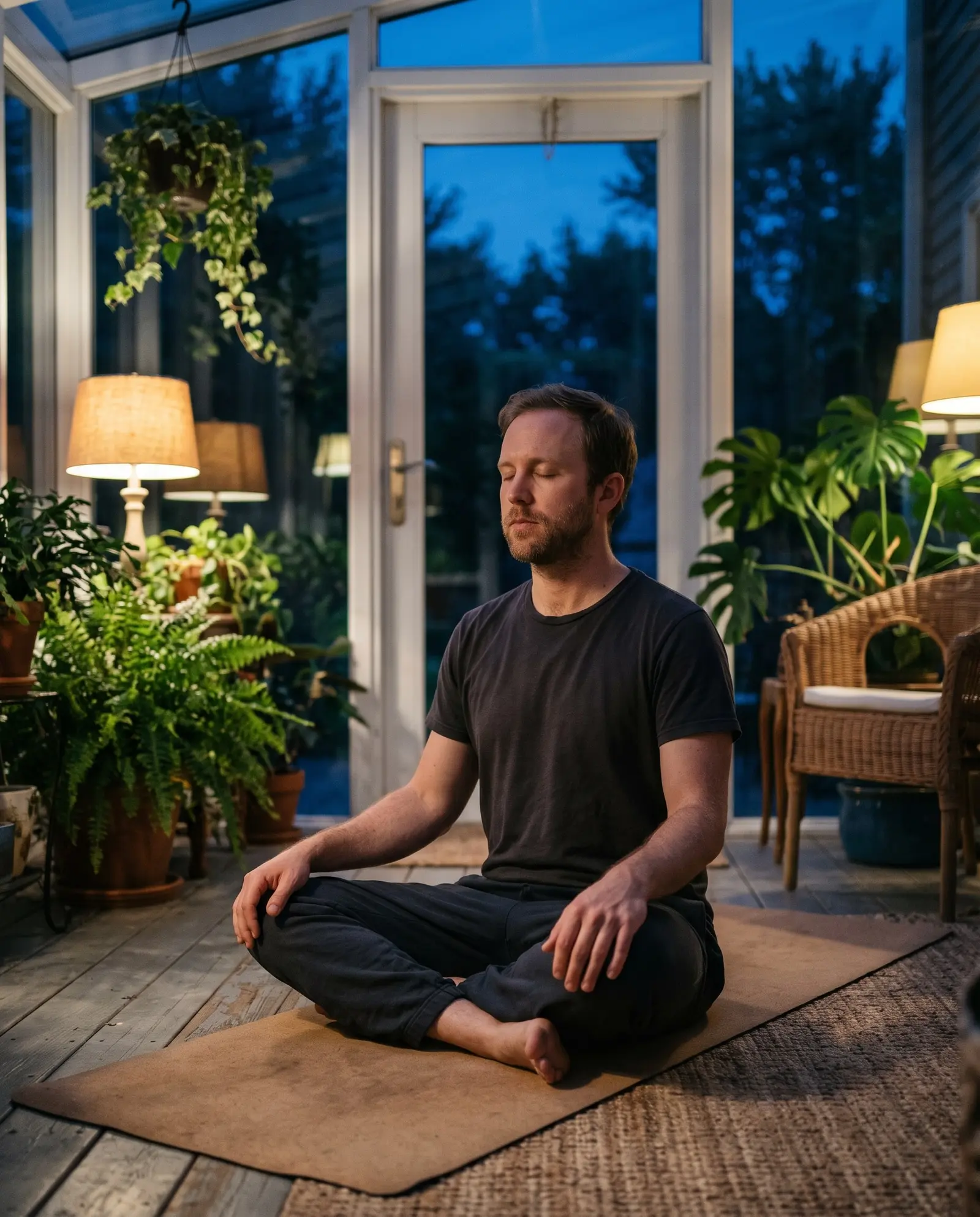
Your wind-down, step by step
- 2 hours before
Close out the day
Write tomorrow's to-do list so your mind can set it down.
- 1 hour before
Move gently
A few minutes of yoga or slow stretching helps you relax.
- 45 minutes before
Warm and dim
Take a warm shower and lower the lights at home.
- 15 minutes before
Screens down, book up
Swap your phone for a calm book or a few slow breaths.
- Bedtime
Lights out
Aim for the same bedtime most nights.
Where magnesium glycinate and L-theanine fit into your routine
Supplements fit best as one part of a calm routine, alongside the habits above. Here's what the research says about four ingredients used for calm and sleep.
Magnesium glycinate: calm muscles, calm nerves
Magnesium is a helper in more than 300 enzyme systems, including ones for your muscles and nerves [3].
Magnesium glycinate is magnesium bound to the amino acid glycine.
Magnesium glycinate supports muscle relaxation, your nervous system and healthy sleep patterns. A 2021 review of a few small studies, all in older adults who had insomnia, found magnesium may help them fall asleep faster, but the studies were low quality [4].
5-HTP: a building block for serotonin
5-HTP, from the seed of the Griffonia simplicifolia plant, is a building block your body turns into serotonin. Your body then uses serotonin to make melatonin, your sleep hormone. Research on 5-HTP for sleep is still very limited.
The middle step
By day: L-theanine and reishi
Good days help good nights.
L-theanine is an amino acid from green tea [6]. A review of 9 trials suggests it may help ease stress when you're under pressure [6]. And a review of 13 trials with 550 people found it may support your sleep satisfaction and feeling refreshed when you wake [7].
Reishi is a mushroom valued in traditional Asian medicine for over two thousand years [8]. Research on reishi for calm in people is still limited, and most studies so far are in animals or small groups.
Frequently asked questions
Can depression cause fatigue?
Yes. Depression and grief are both on the list of causes of fatigue. The safety notes below cover when to bring it up with your doctor.
What can I take for fatigue?
The right pick depends on what's draining you, so start with the sleep, food and movement habits above. The safety notes below cover asking your provider about vitamins.
Can exhaustion make you sick?
It can play a part. When you're short on sleep, you may have more trouble fighting common infections.
Safety notes and when to see a doctor
At your visit, your doctor will ask about your history, your fatigue, and your habits and feelings, then do an exam [1]. You may get blood tests for anemia, diabetes and infection, plus thyroid, kidney and liver tests and a urine test [1].
If you are pregnant or nursing, under 18, taking medication or have a medical condition, consult your physician before use.
Ask your provider whether any vitamins might help you [1].
Count the magnesium in all your supplements. The NIH sets the adult upper limit for supplemental magnesium at 350 mg a day, and more can cause diarrhea, nausea and cramping [3, 4].
Don't take 5-HTP with SSRIs, MAOIs or other serotonergic drugs without your doctor.
L-theanine may lower blood pressure slightly, so check with your doctor if you take blood-pressure medicine.
Reishi may interact with blood thinners and blood-pressure or diabetes medicines, so talk to your doctor first.
Don't take valerian, lemon balm or passion flower with alcohol or sedatives.
References
- Fatigue: MedlinePlus Medical Encyclopedia. MedlinePlus (U.S. National Library of Medicine, NIH).↩
- Sleep Deprivation and Deficiency - How Sleep Affects Your Health. National Heart, Lung, and Blood Institute (NIH).↩
- Magnesium - Health Professional Fact Sheet. NIH Office of Dietary Supplements.↩
- In the News: Magnesium Supplements for Sleep Disorders. National Center for Complementary and Integrative Health (NIH).↩
- Iron - Health Professional Fact Sheet. NIH Office of Dietary Supplements.↩
- The Effects of Green Tea Amino Acid L-Theanine Consumption on the Ability to Manage Stress and Anxiety Levels: a Systematic Review. PubMed (Plant Foods for Human Nutrition, peer-reviewed).↩
- Examining the effect of L-theanine on sleep: a systematic review of dietary supplementation trials. PubMed (peer-reviewed systematic review).↩
- Ganoderma lucidum: From Ancient Remedies to Modern Applications: Chemistry, Benefits, and Safety. PMC (peer-reviewed review).↩
These statements have not been evaluated by the Food and Drug Administration. This product is not intended to diagnose, treat, cure, or prevent any disease.



Comments
Sign in to join the conversation.
No comments yet. Be the first.