


What Is Valerian Root?
You may have seen valerian on a box of bedtime tea. Valerian is a flowering plant. It comes from Europe and Asia, and it also grows in North America [1].
The part you use grows underground: the roots and rhizomes, which are stems that creep sideways under the soil [1]. That's why you'll nearly always see it called valerian root.
So when you read about valerian root uses and benefits, you're reading about a plant with a very long story and a short research record. It sits beside chamomile, lemon balm and other natural sleep aids, and below, we walk through what it looks like, what's inside it, and what the studies mean for your nights and days.
What Valerian Looks Like, and Why It Smells So Strong
A valerian root picture guide
Above ground, valerian is a tall plant topped with clusters of small, pale flowers. If you spot it in a garden, those soft flower heads are the easiest clue.
The part used in teas and supplements stays below the soil. Once dried, valerian root looks knobby and light brown, and in loose tea you'll often see it cut into small bits.

That famous smell
Open a jar or bag of dried valerian root and you'll likely notice it right away: a strong, distinctive smell. If it catches you off guard, you're far from alone.
That strong smell is normal for the dried herb.
What's Inside the Root and How It May Work
Valerian root holds a mix of natural compounds, not just one. One of them is valerenic acid.
One possible way valerian works is by acting on GABA, short for gamma-aminobutyric acid, in your brain. GABA is a messenger linked with feeling calm and settled.
The root holds many natural compounds, including valerenic acid.
Valerian is thought to act on GABA, your brain's calm-and-settled messenger.
Valerian Root Benefits for Sleep: What the Studies Found
Sleep is valerian's best-known use, and it's where research has looked the hardest. Here's the plain picture: the evidence on valerian for sleep problems is inconsistent [1].
A 2024 umbrella review, which is a review that pulls together earlier reviews, found no clear evidence for insomnia [2].
A relatively small amount of research has looked at valerian's effects on various conditions.
Beyond Sleep: Calm, Stress and Other Claimed Benefits
Today, valerian is also promoted for stress and worry [1].
Research on the health benefits of valerian root beyond sleep is still early. The table shows where each use stands [1].


| Use | Where it comes from | What research says so far |
|---|---|---|
| Sleep | Historical use, still promoted today | Inconsistent results |
| Stress and worry | Promoted today | Not enough evidence yet |
| PMS and menstrual cramps | Looked at in research | Not enough evidence yet |
| Migraine, tiredness, stomach cramps | Historical uses | Not enough evidence yet |
Traditional use vs. proven use
A traditional use tells you how a plant has been used over many years. A proven use means well-run studies tested it and found the same result again and again.
When a benefit list doesn't say which is which, look at what it points to. History and tradition tell you one thing; strong, repeated trials tell you another.
Both kinds of knowledge have value for you. Tradition shows why a plant earned its place in evening rituals, and research shows how far that story has been tested.

Do the Benefits Differ for Women and Men?
Wondering about valerian root benefits for women, or for men? Start by asking who the studies actually included.
A small study can't say much about any one group, whether that's women, men, or a certain age.
For women: a hint around menopause
The one point the research raises for women is menopause. Three small studies suggest valerian might be helpful for menopause symptoms, but there isn't enough evidence to know for certain [1].
For men
We didn't find a separate set of findings for men in the trusted sources we checked. So the general findings in this article apply to you.

Tea, Extract, Capsules or Tablets: How the Form Changes What You Get
You might meet valerian in a bedtime tea, a liquid extract, a capsule or a tablet. Each brings the root into your evening a different way, and they don't all give you the same amount.
Valerian root tea benefits
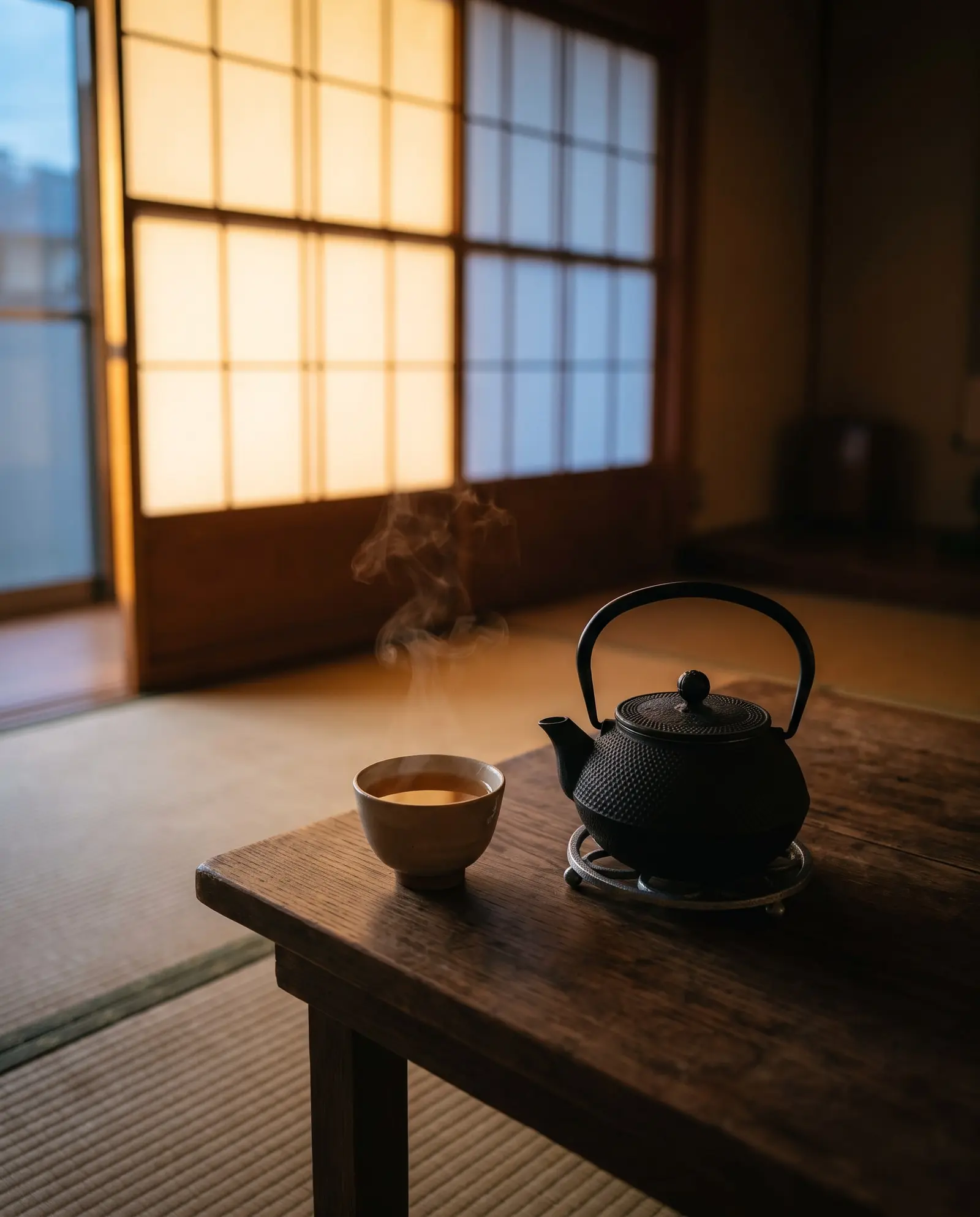
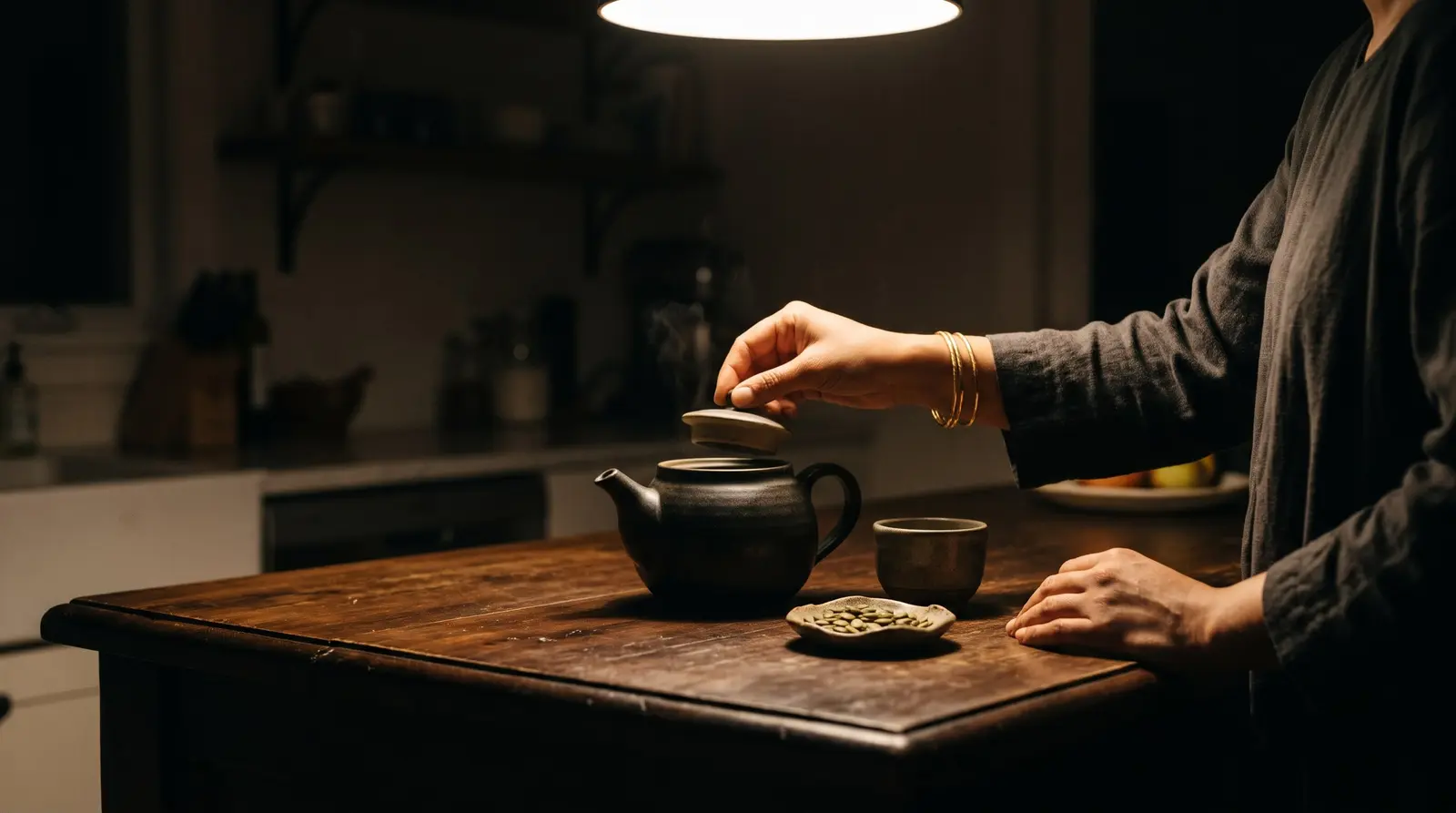
Valerian root tea brings a gentle, warm ritual. Making a cup gives you a few slow minutes, and a warm mug can become a signal that your day is winding down.
The amount of root you get per cup varies, though. How long you steep it and how strong you make it both change what ends up in your mug.
Extracts, capsules and tablets
An extract concentrates the root, so a small serving carries more of it. Capsules and valerian root tablets usually hold a set amount, so you get a more consistent dose each time.

Tea, extract or capsule?
How each form of valerian fits into your day.
Valerian root tea
- Amount
- Varies cup to cup
- Smell
- Strong and earthy
- Feels like
- A wind-down ritual
Valerian root extract
- Amount
- More concentrated
- Format
- Liquid or powder
Capsules and tablets
- Amount
- Set per serving
- Smell
- Mostly sealed away
- How to check
- Read the serving size
So, is valerian root tea as effective as capsules or extract? Our sources don't compare the forms head to head, so there's no simple answer.
If you want to know exactly how much you're taking, a labeled capsule or tablet makes that easier. If the ritual matters most to you, tea earns its place.
How to Read a Valerian Label
If you're looking at a valerian root supplement, the label tells you what's inside. A few lines tell you most of the story.
How many capsules, tablets or gummies count as one serving.
The milligrams of valerian root in that serving.
Some labels list a measured compound, such as valerenic acid.
In a blend, valerian sits beside other herbs.
What standardization means
Standardized means the maker measured a certain compound in the extract, so each batch aims for the same level. That's why some labels list valerenic acid next to the root.
Serving size and the real amount
Check the serving size first, since one serving might be one capsule or two. Then find the valerian amount for that serving, listed in milligrams (mg).
Why a blend may not show every amount
In a blend, valerian is one herb among several. Some blend labels give the amount of each herb, while others list only a total for the whole blend, so you can't see the valerian amount on its own.
Neither style is wrong. It just shapes how much detail you get about each herb you're taking.
How Long Valerian Takes to Work
How long does valerian root take to work? The trusted sources we checked don't give a set timeline.
If you try valerian, a short note each morning can help you see how your evenings feel.
Morning, Afternoon or Bedtime: When to Take Calming Botanicals
When is the best time of day to take valerian root? It depends on what you want from it. Valerian's long history is as a bedtime herb, but it also shows up in blends made for busy days.
How to take valerian root for sleep
For sleep, the simplest plan is to follow the label of the form you choose, since teas, extracts and capsules each come with their own directions. Bedtime products usually tell you how long before bed to take them.
Then make it part of the same calm steps each night, like the routine in the next section.

Pairing Valerian With Other Calming Ingredients and a Wind-Down Routine
In blends, valerian often sits beside other ingredients. Here's what each common partner does, and how it differs from the root.

Valerian and its common partners
What each one is, in plain terms.
Valerian root
The dried root of a flowering plant.
- Type
- Plant root
Magnesium
A mineral that supports muscle relaxation, your nervous system and healthy sleep patterns.
- Type
- Mineral
Melatonin
A hormone your body makes that helps encourage your natural sleep cycle.
- Type
- Hormone
- Made from
- Serotonin, in your body
L-theanine
An amino acid often found in daytime calm blends beside calming herbs.
- Type
- Amino acid
To go deeper, see how magnesium may help you rest easier.
A simple wind-down routine
A calming tea or herb fits naturally into a routine you repeat each night. Here's one you can shape around your own bedtime.
Your wind-down, step by step
- 60 minutes before bed
Set the day down
Jot tomorrow's to-do list and leave your phone charging in another room.
- 45 minutes before bed
Lower the lights
Switch to lamps and soft light around your home.
- 30 minutes before bed
A warm, caffeine-free cup
Brew an herbal tea, or take an evening supplement as its label directs.
- 15 minutes before bed
Something slow
Read a few pages, stretch gently or play quiet music.
- Bedtime
Lights out
Head to bed close to the same time as last night.
For the reasons steady evening habits matter, see the science of winding down.

Frequently asked questions
What is valerenic acid, and why is it on some labels?
It's one of the natural compounds in valerian root. When a label lists it, the maker measured it in the extract so each batch aims for the same level.
Can you use valerian during the day, too?
Its long history is as a bedtime herb. But today it's also promoted for stress and worry, so you'll find it in some daytime calm blends beside ingredients like L-theanine.
Valerian Root Side Effects, Safety Notes and When to See a Doctor
Here's everything about safety in one place. Research suggests valerian is generally safe for most adults to use for a short time [1].
A 2024 review of the research found valerian has a good safety profile [2]. Keep in mind that supplements aren't approved by the FDA before they're sold [1].
Valerian can add to drowsiness. Don't combine it with alcohol, sedatives or sleep medicines [1].
If you use a calming blend with valerian during the day, notice how it affects your focus before you drive or do anything that needs you sharp.
Can you take valerian every night? Longer use and stopping
In studies, valerian has been used with apparent safety at 300 to 600 mg a day for up to six weeks, but the safety of long-term use is unknown [1].
If you've used valerian for a long time, don't stop all at once. Stopping suddenly after long-term use may bring withdrawal symptoms like irritability, trouble sleeping or heart changes, so ask your doctor how to ease off [1].
In very rare cases, liver injury has been reported, most often when valerian was taken with other herbs [1]. Tell your doctor about every herb and supplement you use.
Who should check first
Pregnant or breastfeeding: little is known about whether valerian is safe during pregnancy or while breastfeeding [1].
Melatonin in a bedtime blend: keep to the label's directions, since it can cause next-day grogginess.
References
These statements have not been evaluated by the Food and Drug Administration. This product is not intended to diagnose, treat, cure, or prevent any disease.


Comments
Sign in to join the conversation.
No comments yet. Be the first.