
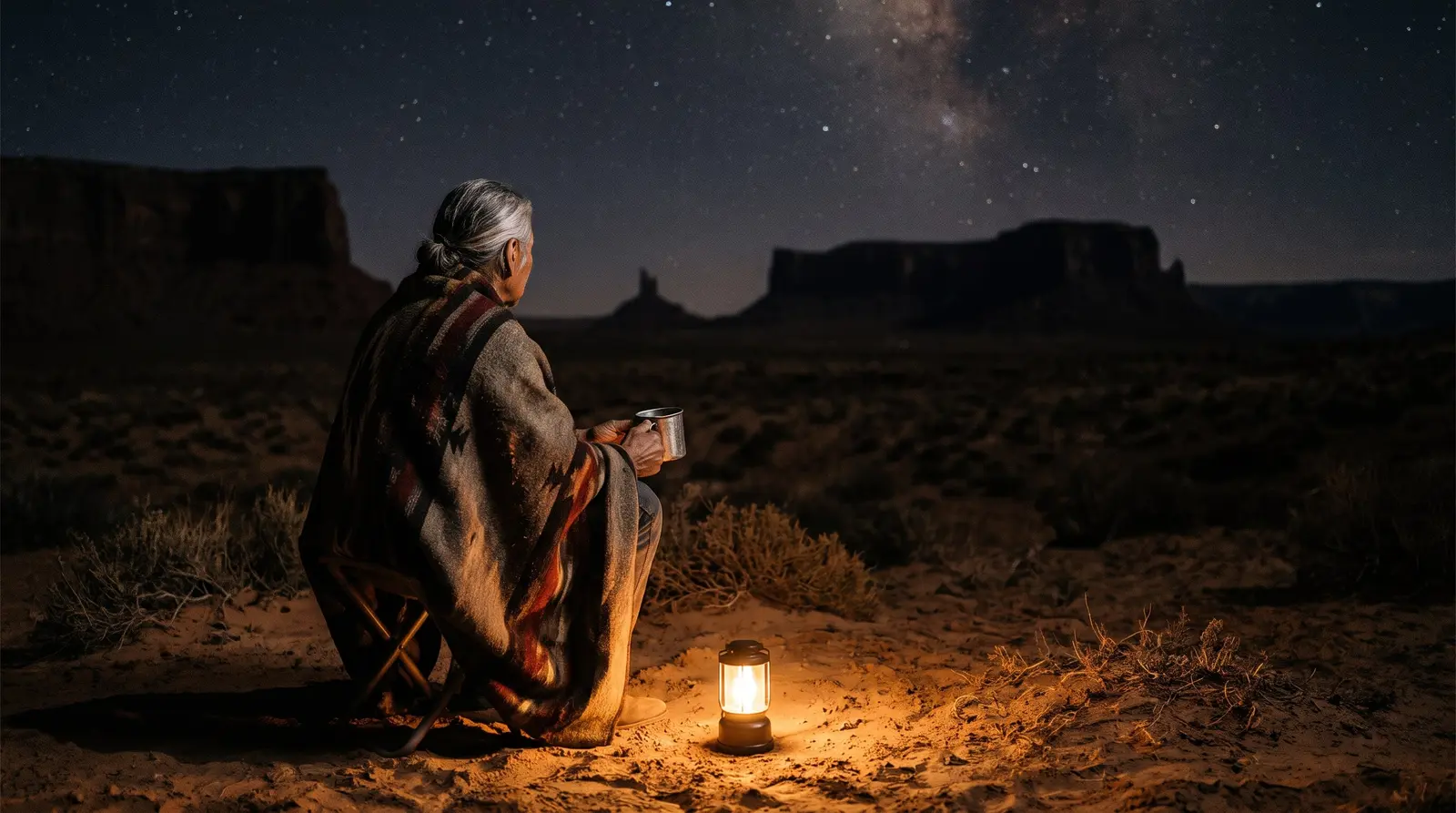

Why stress and lack of sleep feed each other
If a hard day has ever turned into a hard night, you've felt this loop. Researchers put it plainly: stress can disrupt sleep, and sleep loss can raise your stress levels afterward [1].
How stress hormones keep you alert at night
When you're stressed, your body releases cortisol and adrenaline, two hormones that help you react fast. In a tight moment, they're useful.
But when stress runs all day, those hormones can stay high into the evening. That holds your body in an alert state, which works against the natural slowdown you need before sleep.
Cortisol and adrenaline keep your body on guard into the evening.
Your body can't settle, so you fall asleep later or wake more.
After sleep loss, even mild stress can feel stronger. [1]
How the loop can show up for you


Wired but tired
You feel worn out, yet your body stays alert once the lights go off.
Thoughts on replay
The day's problems loop in your head the moment it gets quiet.
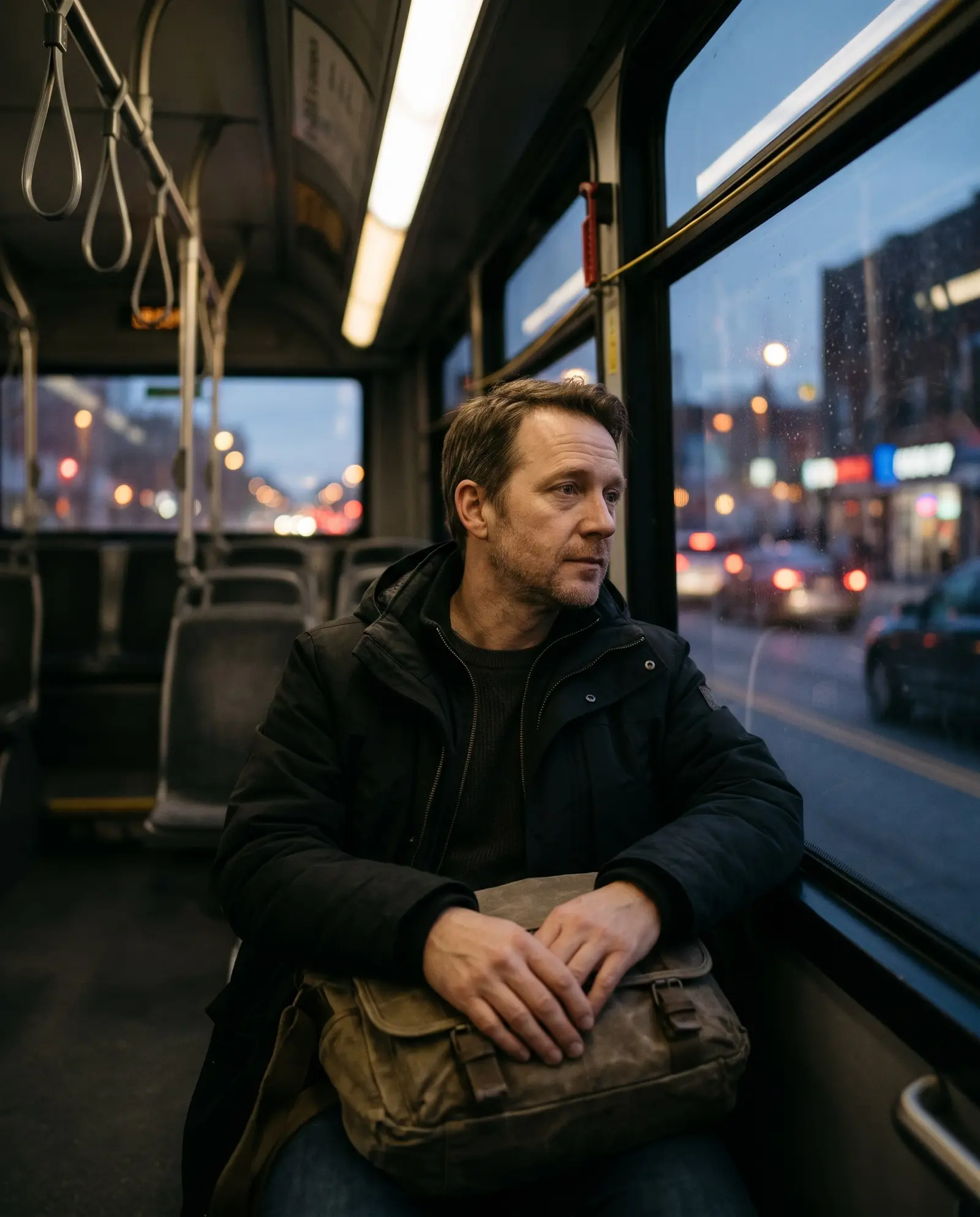
Stress vs. anxiety: what's the difference?
The two feel alike, but they aren't the same. Stress is your response to something in front of you, like a deadline or a tough week. Anxiety is worry that sticks around even when the pressure isn't right there.
Both can keep you awake for the same reason: your mind and body stay on guard. Sleep researchers note that sleep loss and stronger emotional reactions are two common features of anxiety disorders [2]. If worry tends to grow after dark, here's why anxiety can get worse at night.

Which sounds more like you?
A quick look at stress, anxiety and sleep anxiety.
Stress: tied to a cause
Your sleep trouble follows a clear event, like a move, a big project or a hard conversation. It often eases as the pressure passes.
Anxiety: worry that lingers
Your worry may jump from one topic to the next. Your body can feel tense with no clear reason.
Sleep anxiety: worry about sleep itself
After a few rough nights, bedtime starts to feel like a test.
Signs of sleep anxiety
Doing math on how many hours are left
Tension in your chest or shoulders as bedtime nears
Planning your whole next day around a bad night
If bedtime itself has started to feel scary, our guide to sleep anxiety walks through it.
How lack of sleep turns up stress and anxiety
You've likely had a short night before, and it passed. Still, it can shift how you feel the next day.
In a small study of 18 healthy adults, researchers scanned brains after a normal night and after a night without sleep [2]. After sleep loss, the amygdala, a deep emotional center in the brain, ramped up more while they waited for something upsetting. If you tend to run anxious, a short night may hit you harder.
A second study found that after sleep loss, even mild stress brought more stress, anxiety and anger than it did in rested volunteers [1]. In the authors' words, sleep loss lowers the threshold for feeling stressed.
So if a normal task feels heavier after a rough night, that's not a flaw in you. It's your brain running on less rest.
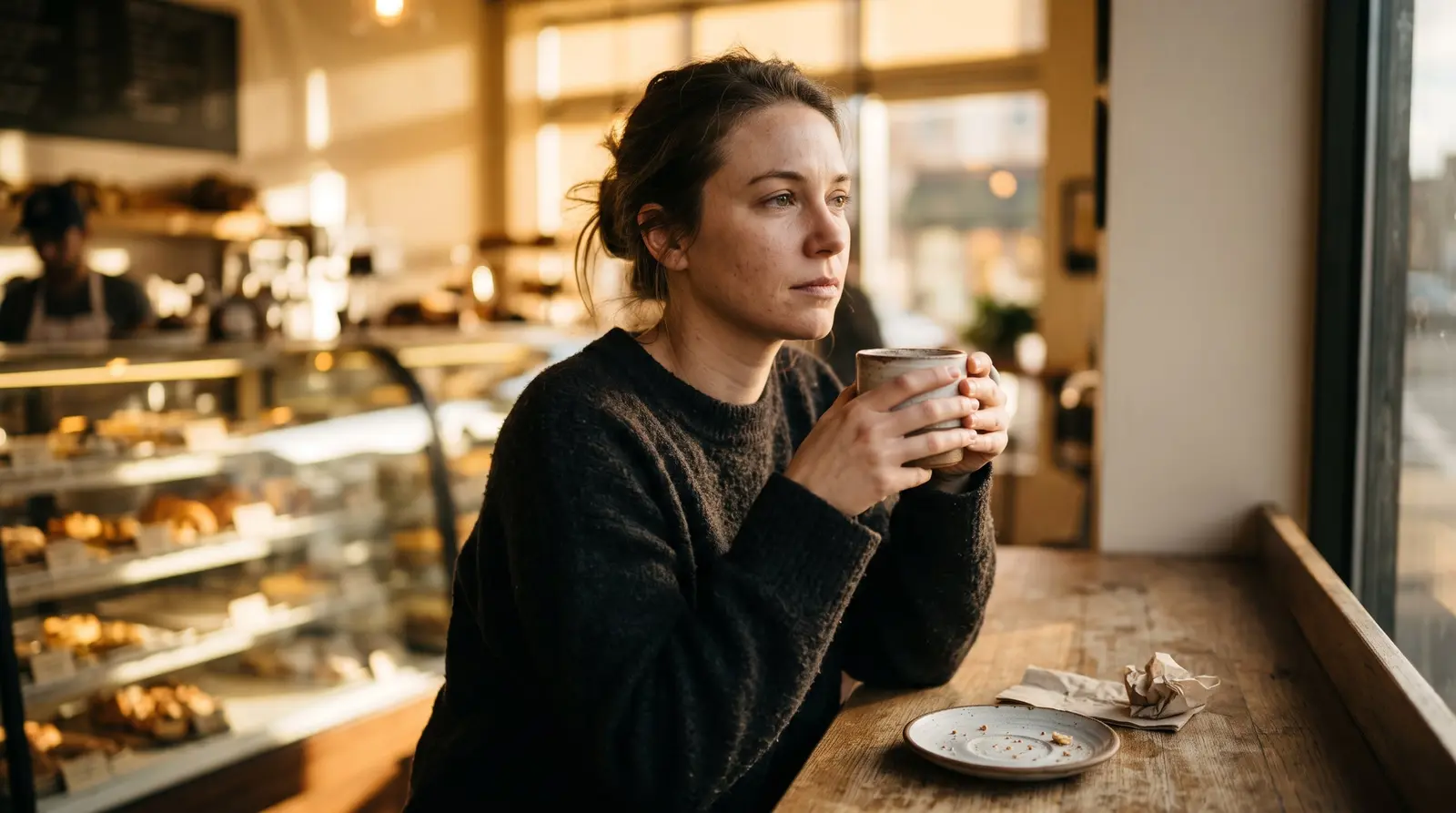
Free habits that help tonight
You don't need anything new to start. These habits give your body one clear signal: the day is done.
Keep the same wake time, even after a bad night. A steady wake time anchors your rhythm, and bedtime tends to follow.
Ease off stimulants later in the day. Caffeine and nicotine keep you alert, so move your coffee earlier.
Keep naps short and early, or skip them while you reset. A long late nap can push sleepiness away from bedtime.
Make your room cool, dark and quiet. A fan or soft steady sound can cover noises that wake you.
Dim lights and screens before bed. Bright light and busy feeds keep your mind switched on.
Move during the day. A walk or workout burns off tension, ideally earlier rather than right before bed.
Eat a lighter dinner, not too late.
Save your bed for sleep, so it doesn't turn into your worry spot.
A wind-down timeline for stressful evenings
A wind-down is a set order of calm steps before bed. Doing it the same way each night teaches your body what comes next, and our bedtime routine guide for adults has more ideas.
Your stress-easing wind-down
- 3 hours before
Finish the big stuff
Wrap up work, big meals and tough conversations so your body has time to settle.
- 2 hours before
Plan tomorrow on paper
Write tomorrow's top three tasks. Once they're on paper, you don't have to hold them.
- 1 hour before
Dim and unplug
Lower the lights, set your phone aside and pick something slow, like reading or a warm shower.
- 15 minutes before
Breathe and settle
Try one relaxation technique from the next section.
- Bedtime
Lights out
Let sleep come on its own. If it doesn't, the night-waking plan below works at any hour.
Relaxation techniques that help you sleep
Relaxation techniques give your busy mind one simple job. That can be enough to let your body step down from alert.
Choose a technique for tonight
Three easy ways to calm your body before sleep.
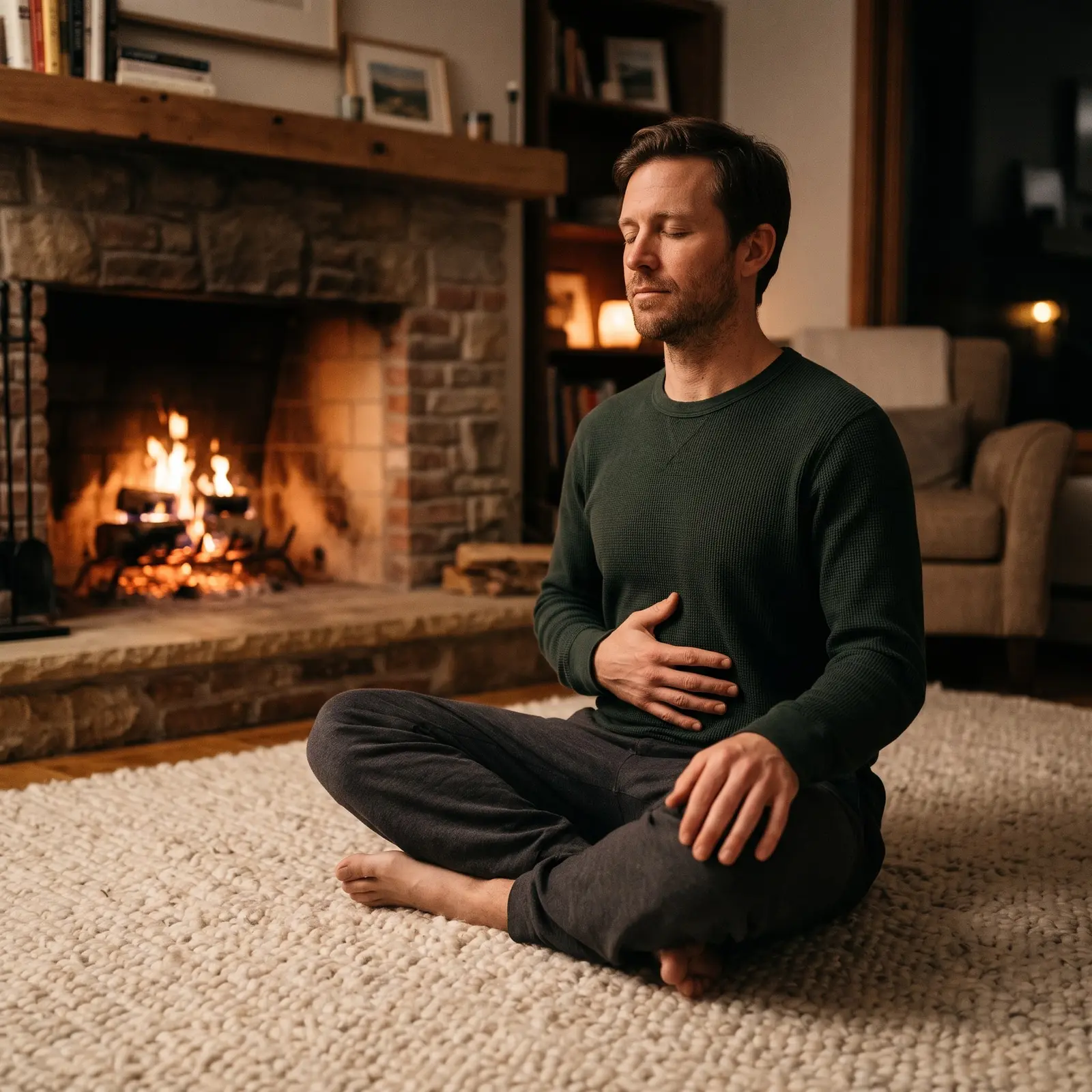
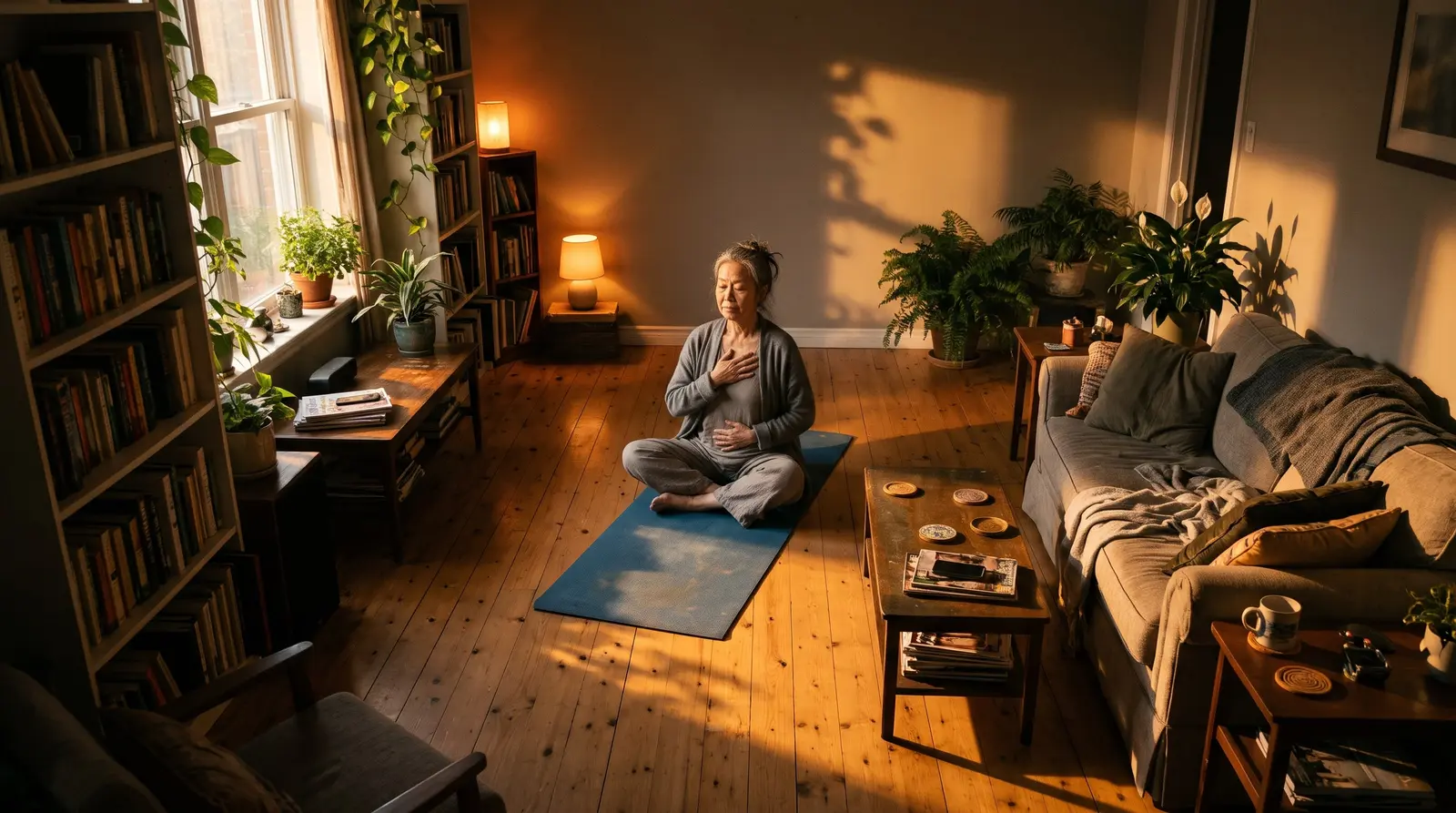
Slow belly breathing
Rest a hand on your belly and breathe in through your nose so your hand rises. Breathe out a little longer than you breathed in, and keep it slow and easy.
Progressive muscle relaxation
Starting at your feet, tense one muscle group for a few seconds, then let it go. Move up through your legs, belly, hands, shoulders and face.
A gentle body scan
Move your attention slowly from your toes to your head, noticing each spot without trying to fix it. When a thought pulls you away, return to where you left off.
None of these needs to feel perfect. If your mind wanders a hundred times, coming back a hundred times is the practice.
What to do when you wake at 3am with a racing mind
Waking with your thoughts already running is one of the hardest parts of stress. Here's a calm plan for those moments.
Don't check the time. Clock math, like only four hours left, adds pressure.
Breathe first. Give belly breathing a few rounds before you decide anything.
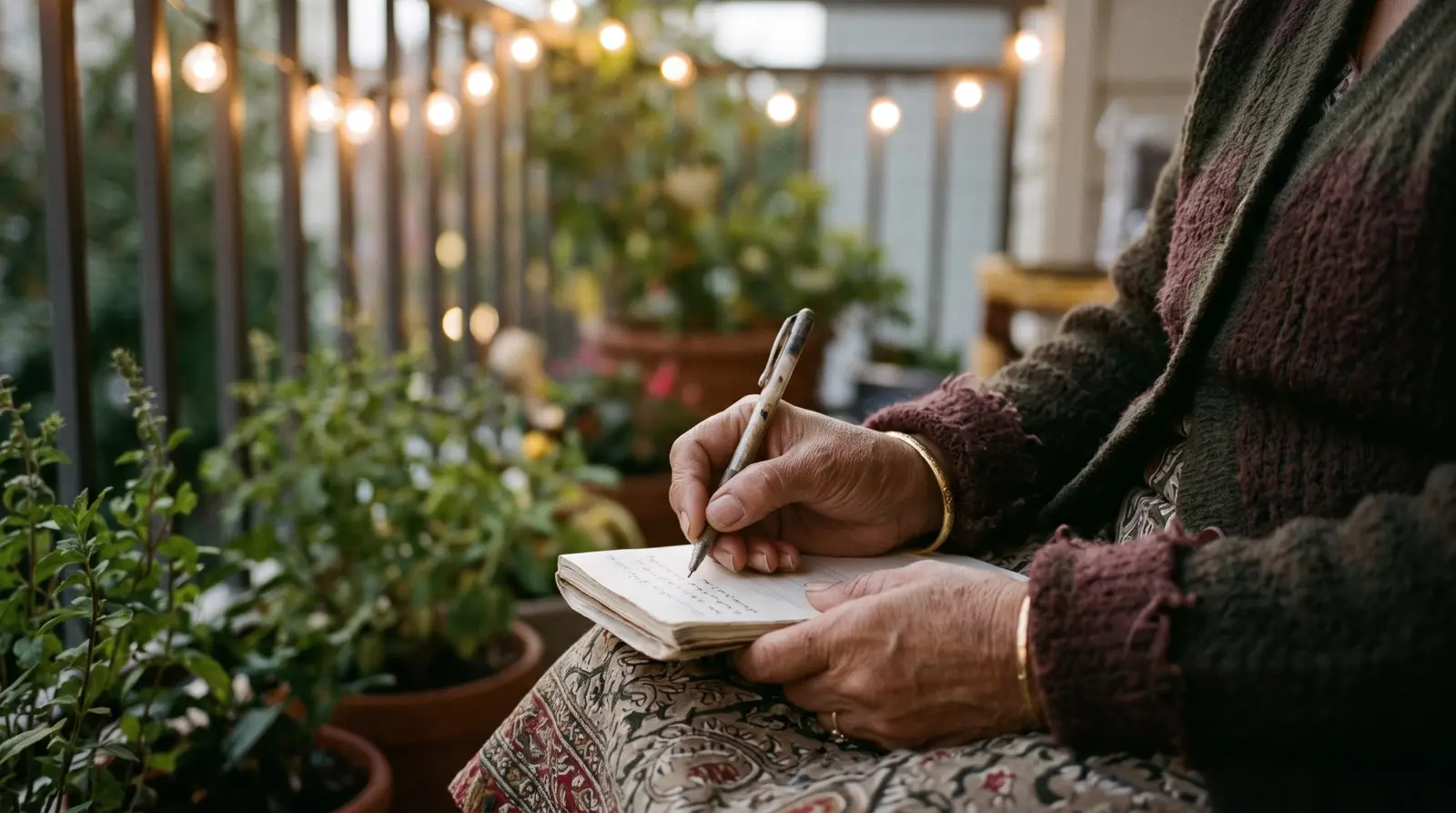
Park the thought. Jot the worry in a few words on a notepad, so it's waiting for you in the morning.
Get up if you're wide awake. Move to a dim room and do something dull until you feel drowsy.
Keep lights low and screens away. Bright light tells your body it's morning.
If nights like this are your usual pattern, our guide on why you can't turn off your mind at night goes deeper.
Keep daytime stress from following you to bed
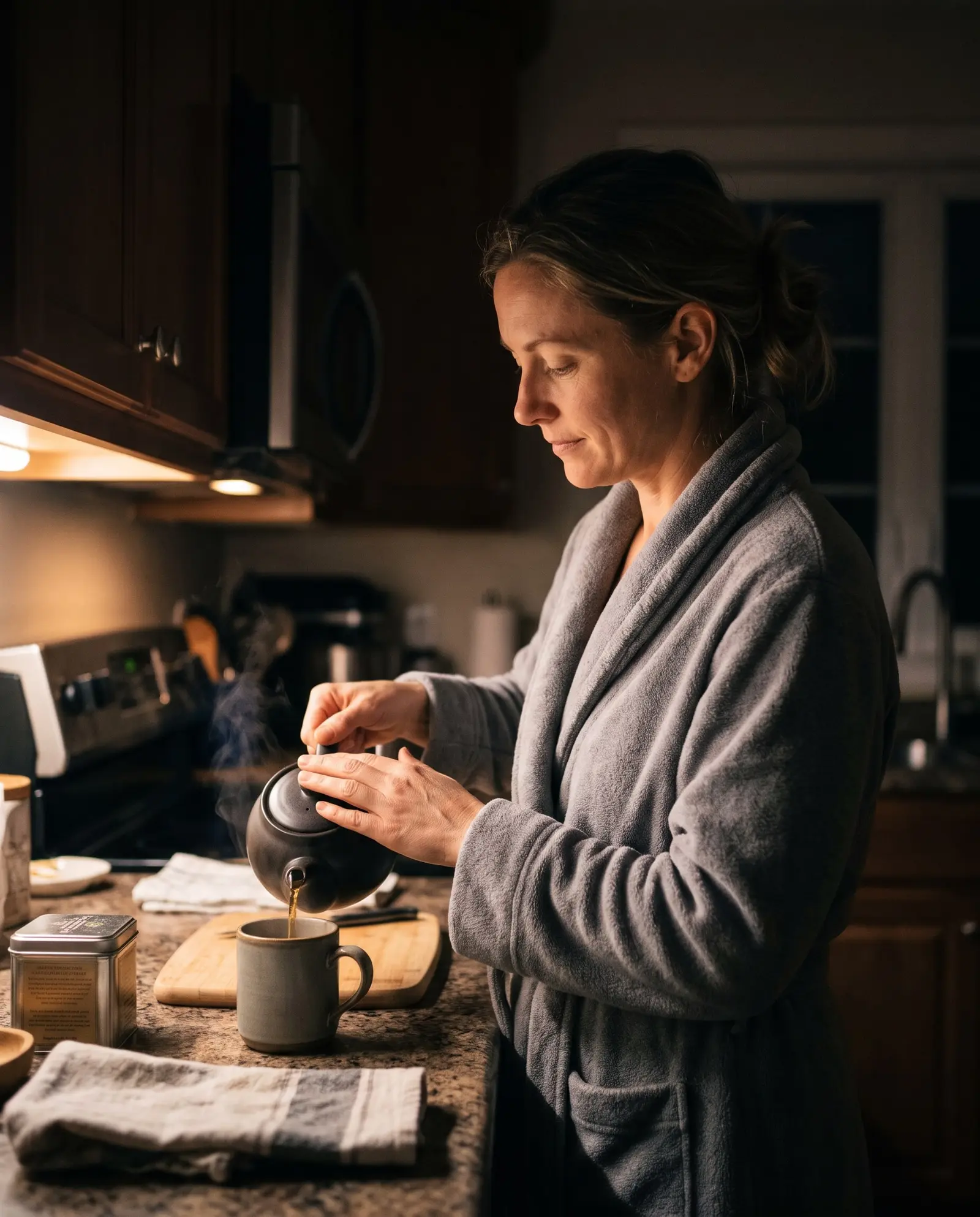
Good nights often start in the day. If stress builds from morning to evening with no release, it's still there at bedtime.
Take short resets. A few slow breaths or a quick walk between tasks lets pressure out before it piles up.
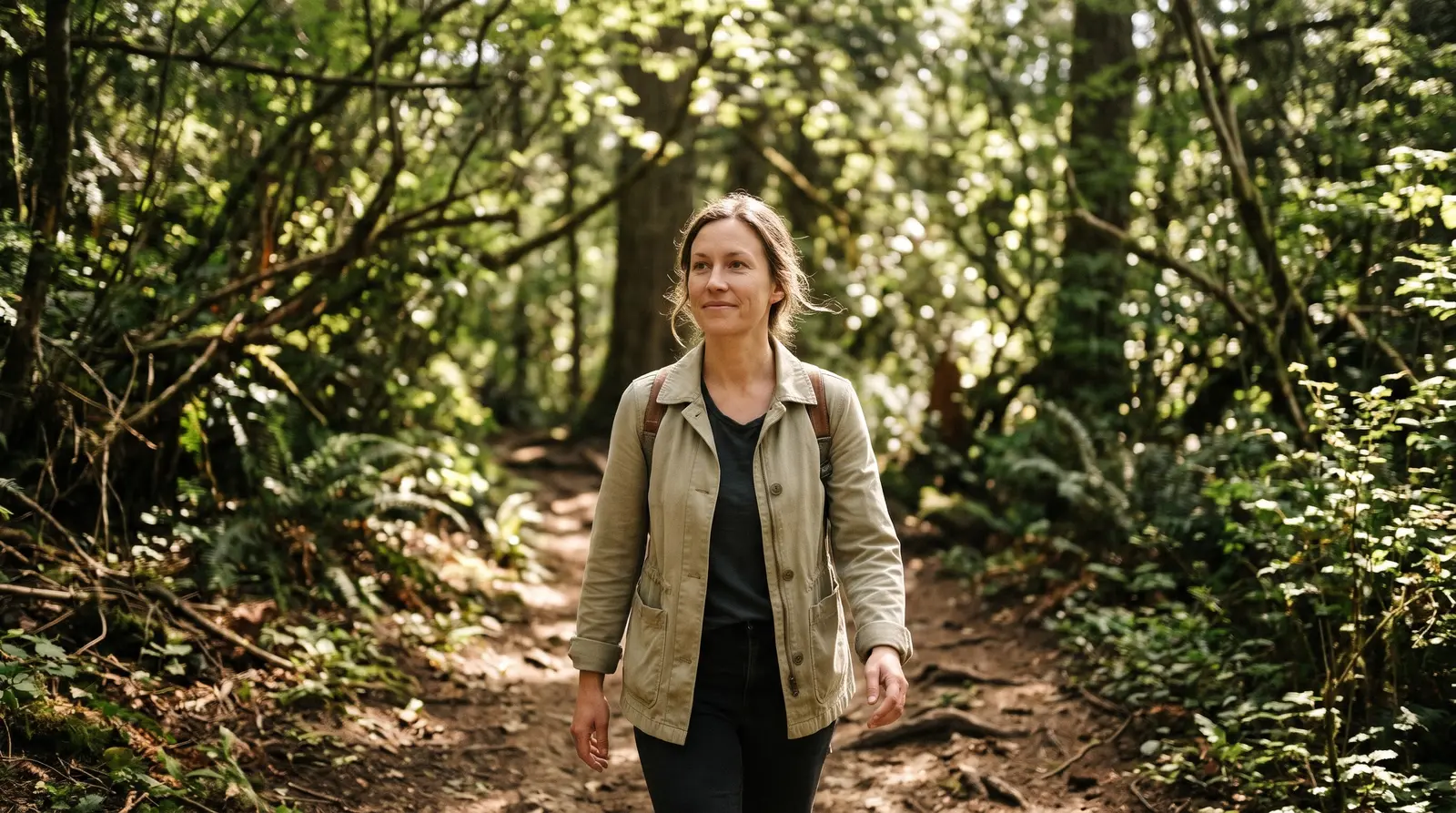
Get outside in daylight. Light during the day helps your body tell day from night.
Set a work cutoff. Pick a time when tasks stop, and note where you left off.
Talk it through. Saying a worry out loud to someone you trust can make it feel smaller.
For more day-and-night ideas, read how to calm a racing mind.
Track your stress and sleep in a simple journal
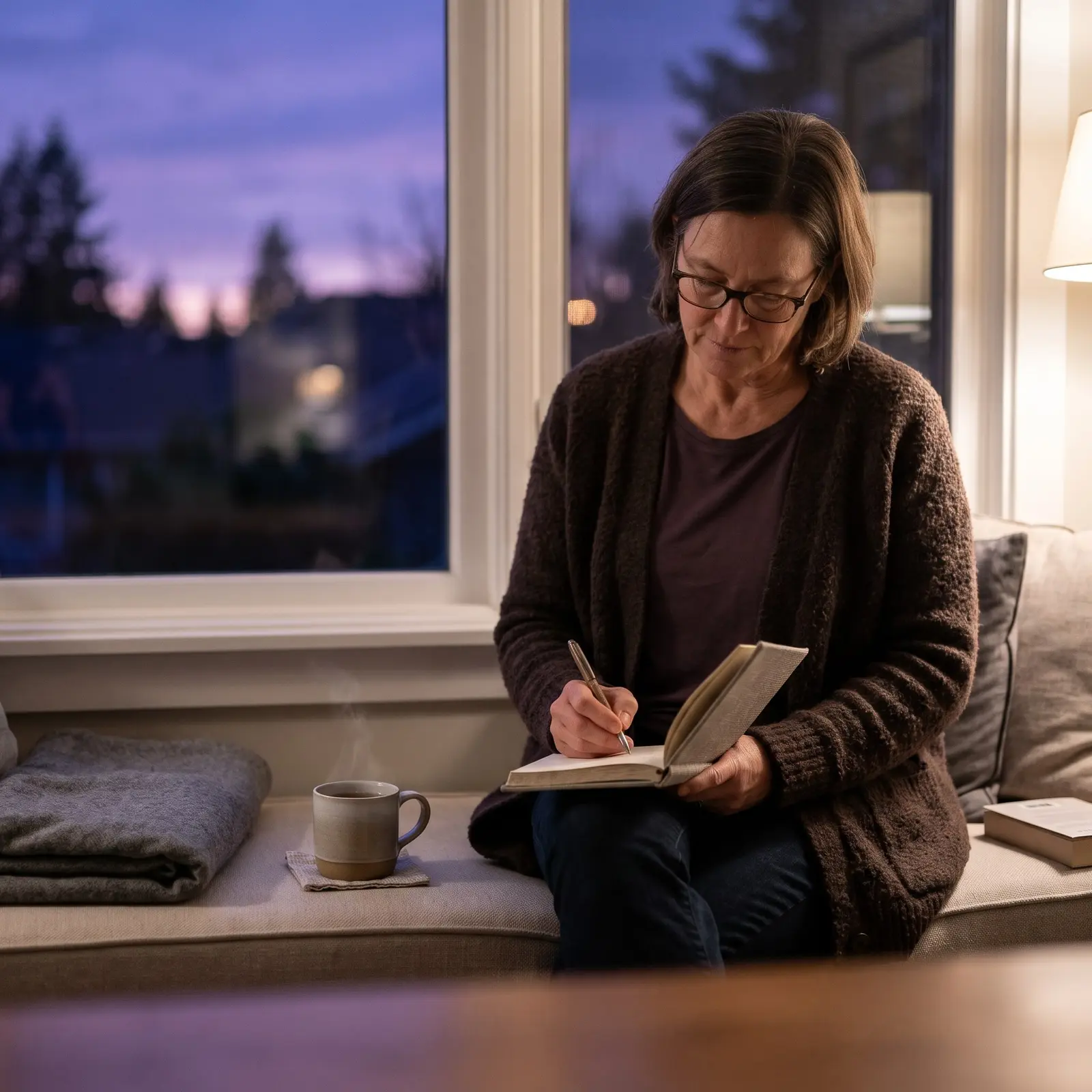
Patterns are hard to see in the moment. A short daily note can show you what helps and what doesn't.
Your stress level today, from 1 to 5
When you went to bed and woke up
Caffeine, naps, exercise and screens after dinner
How rested you felt in the morning, from 1 to 5
After two weeks, look for links. Maybe your worst nights follow late emails, or your best ones follow a walk. That's your own data, and it's more useful than any general rule.
Ingredients research looks at for stress and sleep
Curious about supplements? Here's what each ingredient is and what studies have found so far.
L-theanine: calm without drowsiness
L-theanine is an amino acid found in green tea [4].
A review of 9 controlled studies found it may help reduce stress and anxiety under stressful conditions [4]. A review of 13 sleep trials with 550 people noted that earlier studies found it aids relaxation without making you drowsy [5]. Its authors concluded L-theanine appears to be a safe way to support healthy sleep in adults [5].
A third review, in healthy adults, found no consistent change in sleep [6]. So the results so far are mixed, and its clearest story is gentle relaxation.
Lemon balm: a calming herb under study
Lemon balm is an herb that's thought to work with GABA, a brain messenger that helps you slow down.
A review says lemon balm holds promise as a calming agent, with studies pointing to calm and better sleep quality [7]. The authors call for larger, stronger trials to confirm it.
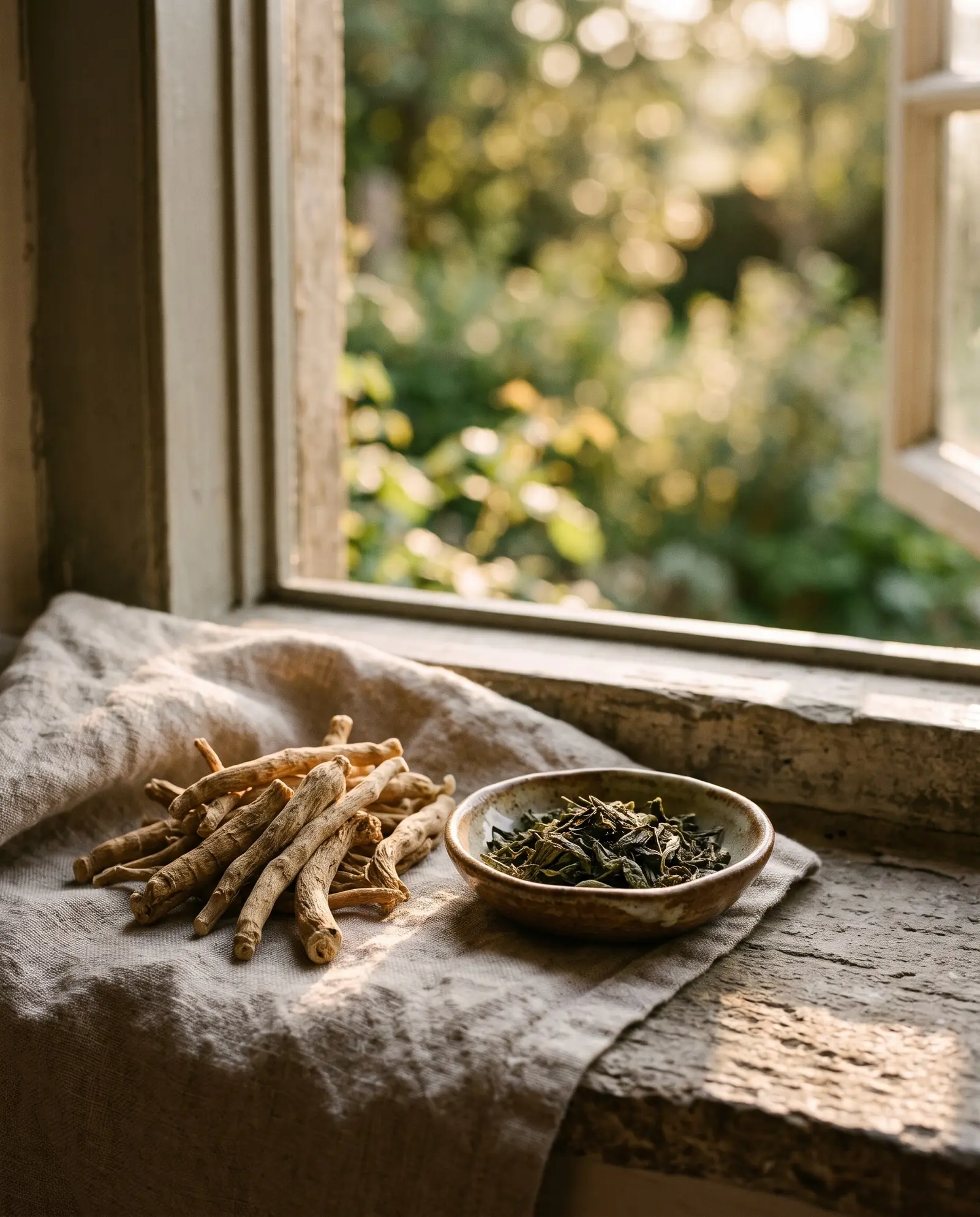
Ashwagandha: an Ayurvedic herb for stress
Ashwagandha has been used for thousands of years in Ayurveda, India's traditional medicine [3]. Its Latin name is Withania somnifera, and today it's often promoted for stress, anxiety and sleep [3].
The NIH's center for integrative health says some ashwagandha preparations may help support sleep and a healthy response to stress [3]. The studies so far are small and use different preparations, and its effect on anxiety is still unclear.
Reishi: a mushroom with early research
Reishi, called lingzhi in Chinese, is a mushroom. Most research on it so far has been in animals or small groups of people, so the evidence for calm or sleep in people is still limited.
Frequently asked questions
I'm overthinking at night and can't sleep. What can I do to stop this?
Try a set worry window in the early evening. Sit down for a few minutes, think about your worries on purpose, then close it. When those thoughts return at bedtime, remind yourself they already have a slot tomorrow.
How to beat anxiety?
There's rarely one fix. The free habits and daytime resets above work best together, a little each day. If anxiety feels frequent or heavy, the safety notes at the end cover when to get support.
How to beat insomnia?
Go to bed when you feel sleepy, not just tired. Sleepy means heavy eyes and nodding off; tired means drained but alert. If trouble lasts for weeks, see the safety notes at the end.
What are some relaxation techniques that can help me sleep?
Beyond breathing, muscle relaxation and a body scan, try guided imagery: picture a calm place in detail, like the sound of waves or the feel of warm sand. Soft, slow music or a quiet audio story can also give your mind something gentle to follow.
Safety notes and when to see a doctor
Dietary supplements are not approved by the FDA before they're sold [3].
Label caution: If you are pregnant or nursing, under 18, taking medication or have a medical condition, consult your physician before use.
References
- Sleep Deprivation and Stressors: Evidence for Elevated Negative Affect in Response to Mild Stressors When Sleep Deprived. PMC (NIH National Library of Medicine).↩
- Sleep deprivation may lead to higher anxiety levels, fMRI scans show. American Academy of Sleep Medicine.↩
- Ashwagandha: Usefulness and Safety. NCCIH (NIH).↩
- The Effects of Green Tea Amino Acid L-Theanine Consumption on the Ability to Manage Stress and Anxiety Levels: a Systematic Review. PubMed (NIH National Library of Medicine).↩
- Examining the effect of L-theanine on sleep: a systematic review of dietary supplementation trials. PubMed (NIH National Library of Medicine).↩
- Effects of Tea (Camellia sinensis) or its Bioactive Compounds l-Theanine or l-Theanine plus Caffeine on Cognition, Sleep, and Mood in Healthy Participants: A Systematic Review and Meta-Analysis of Randomized Controlled Trials. PMC (NIH National Library of Medicine).↩
- Clinical Efficacy and Tolerability of Lemon Balm (Melissa officinalis L.) in Psychological Well-Being: A Review. PMC (NIH National Library of Medicine).↩
- Ganoderma lucidum (Reishi mushroom) for cancer treatment. PMC / Cochrane systematic review.↩
These statements have not been evaluated by the Food and Drug Administration. This product is not intended to diagnose, treat, cure, or prevent any disease.

Comments
Sign in to join the conversation.
No comments yet. Be the first.